NewsDeveloping story
Europe's Entry/Exit System is running, and ETIAS still has no start date
Since 10 April 2026 the EU has recorded non-EU visitors' fingerprints and faces instead of stamping passports. What happens at the border, how the 90/180 count works now, and why the €20 ETIAS has no launch date.

By Spike Travel Editorial Desk, Editorial team
Published Oct 12, 2026. 3 min read
What you need to know
- The EU's Entry/Exit System (EES) has been fully operational in 29 European countries since 10 April 2026; Cyprus and Ireland still stamp passports.
- Visa-exempt visitors give four fingerprints and a facial image on their first crossing. Children under 12 are not fingerprinted.
- Registration is free, needs no action before you travel, and the record is kept for three years.
- Leaving the UK by Eurostar, Eurotunnel or ferry from Dover, you do the EES check before departure.
- Nine countries, including France, Greece and Italy, told Brussels in September they needed more time to run EES at every crossing.
- ETIAS (€20, valid three years) is not operating, and on 12 October 2026 the EU had set no start date.
The EU's Entry/Exit System (EES) replaced passport stamps for non-EU visitors on 10 April 2026, after a phased start that began on 12 October 2025. The European Commission says it now runs at the external borders of all 29 countries that use it: the EU minus Cyprus and Ireland, plus Iceland, Liechtenstein, Norway and Switzerland.
Cyprus and Ireland still stamp passports by hand.
What the system records
Each crossing logs your name and passport details, a facial image, your fingerprints, and the date and place of entry or exit. Refusals are recorded too. If you travel without a visa, EES stores four fingerprints plus your face. Visa holders give a photo only, because their fingerprints are already on file from the visa application. Children under 12 are not fingerprinted. Registration is free and there is nothing to apply for, but refusing the biometrics means being refused entry. The record is kept for three years, or five if no exit is logged.
Who registers
Every non-EU national on a short stay registers, with or without a visa, including British, American, Canadian and Australian passport holders. Citizens of the EU, Iceland, Liechtenstein, Norway and Switzerland are exempt, as are residence-permit and long-stay visa holders. So are Britons with a Withdrawal Agreement residence document.
At the airport
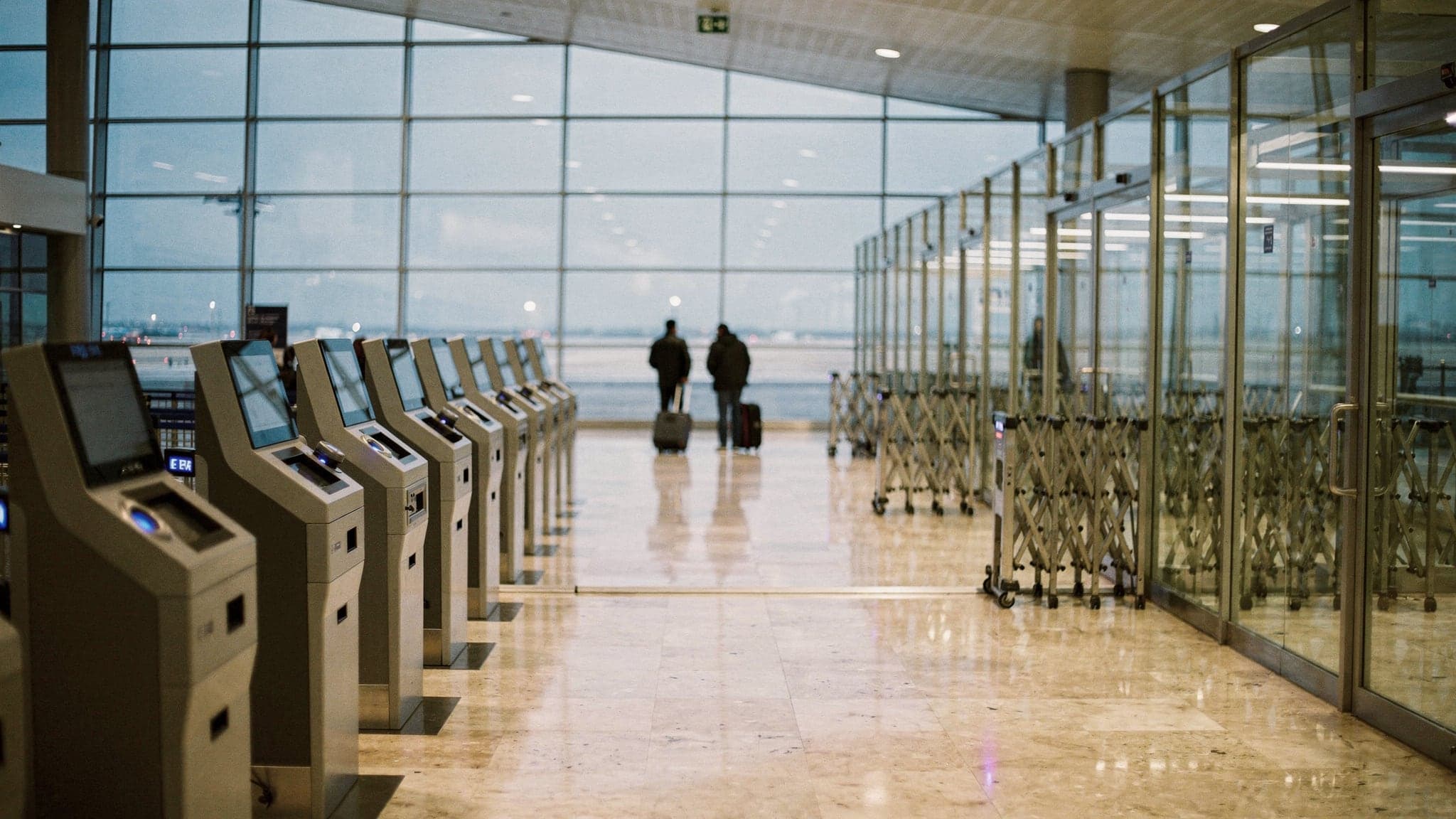
Your first crossing takes longest. An officer, or a self-service kiosk where one exists, scans your passport, takes your photo and records your fingerprints. Later trips only check you against the stored file. Kiosks need a chip passport. The optional Travel to Europe app lets you pre-register up to 72 hours ahead, but on 12 October it covered only entries to Sweden and, for the questionnaire alone, Portugal.
Officially the system has run at every external crossing since April. In practice it has been patchier.
Politico Europe reports that some countries switched it off at peak times over the summer, and that passengers at Brussels Airport queued for up to five hours in September. On 14 September the Guardian reported that nine countries, including France, Greece, Italy and Portugal, had told Brussels they needed more time to fingerprint at some crossings, although the temporary right to suspend checks expired on 6 September. Migration Commissioner Magnus Brunner told Politico on 11 October that member states "had enough time to prepare themselves" and must clear the queues before Christmas.
Eurostar, Dover and Folkestone
Leave Britain by Eurostar from St Pancras, by Eurotunnel at Folkestone or by ferry from Dover and the EES check happens before you depart, GOV.UK says. Eurostar says there is nothing to do in advance: arrive at the time printed on your ticket.
Dover is behind. French officers there logged passengers over the summer without taking fingerprints or photos, and France's interior ministry told the BBC in September that "flexibility is being granted until the end of the year."
The 90/180 rule
The rule has not changed: 90 days in any 180, counted as one total across all 29 countries. EES now does the counting and flags overstayers. Its online stay checker ignores any visit that began before 10 April 2026, so if you were in Europe earlier in the year, do the sums yourself.
ETIAS has no start date
ETIAS, the online authorisation that visa-exempt visitors will need for 30 European countries, is not operating. Its official site says no applications are being taken and that the EU will announce a start date "several months prior to its launch." The site dropped its late-2026 target in July, the House of Commons Library notes, and Euronews has reported that 2027 looks more likely. Nothing official confirms a date. When it starts, ETIAS will cost €20 for applicants aged 18 to 70 and last three years or until your passport expires. Most decisions should take minutes; some could take up to 30 days.
One official page is out of step. GOV.UK's EES guidance, last updated on 10 April, still says ETIAS operations are expected to start in autumn 2026. It also warns that any website selling ETIAS now is doing so fraudulently.
Sources
Where the facts on this page come from. Dates show when we last checked each one.
- European Commission, Migration and Home Affairs: Entry/Exit System (EES)accessed Oct 12, 2026
- European Commission: The Entry/Exit System will become fully operational on 10 April 2026 (30 March 2026)accessed Oct 12, 2026
- Travel to Europe (EU official site): FAQs about EESaccessed Oct 12, 2026
- Travel to Europe (EU official site): Data held by the EESaccessed Oct 12, 2026
- Travel to Europe (EU official site): To whom does the EES not apply?accessed Oct 12, 2026
- Travel to Europe (EU official site): Check how long you can stayaccessed Oct 12, 2026
- Travel to Europe (EU official site): Travel to Europe mobile appaccessed Oct 12, 2026
- Travel to Europe (EU official site): European Travel Information and Authorisation System (ETIAS)accessed Oct 12, 2026
- Travel to Europe (EU official site): ETIAS frequently asked questionsaccessed Oct 12, 2026
- eu-LISA: ETIASaccessed Oct 12, 2026
- GOV.UK (FCDO and Cabinet Office): EU Entry/Exit System guidance, last updated 10 April 2026accessed Oct 12, 2026
- Eurostar help centre: What's the EU's Entry/Exit System (EES)?accessed Oct 12, 2026
- House of Commons Library: The EU Entry/Exit system and EU travel authorisation system (17 July 2026)accessed Oct 12, 2026
- The Guardian: Nine EU countries further delay EES border checks (14 September 2026)accessed Oct 12, 2026
- BBC News: Channel biometric border checks face more delays (14 September 2026)accessed Oct 12, 2026
- Politico Europe: Fix airport queues by Christmas, migration commissioner tells Brussels Airport (11 October 2026)accessed Oct 12, 2026
- Euronews: Europe has officially delayed the roll-out of the ETIAS travel permit (12 August 2026)accessed Oct 12, 2026
Paris dossier
One river, twenty arrondissements and a city that rewards the walker far more than the queue.
These links go to the booking sites we would use ourselves. Nothing here is currently sponsored.
Amsterdam dossier
Gabled canal houses, world-class museums and a city that moves at the speed of a bicycle bell.
These links go to the booking sites we would use ourselves. Nothing here is currently sponsored.
Lisbon dossier
Steep cobbled lanes, river light on tiled walls, and a counter espresso that still costs about a euro.
These links go to the booking sites we would use ourselves. Nothing here is currently sponsored.
Porto dossier
Granite lanes tumbling to the Douro, port lodges across the water, and a sandwich you eat with a knife and fork.
These links go to the booking sites we would use ourselves. Nothing here is currently sponsored.
Barcelona dossier
Gaudí on the skyline, the Mediterranean at the end of the street, and dinner that starts at ten.
These links go to the booking sites we would use ourselves. Nothing here is currently sponsored.
Rome dossier
Two thousand years of ruins on the walk to dinner, and a city that will not be hurried.
These links go to the booking sites we would use ourselves. Nothing here is currently sponsored.
Athens dossier
The Parthenon above the rooftops, souvlaki for under €5 and dinners that start after nine.
These links go to the booking sites we would use ourselves. Nothing here is currently sponsored.
Prague dossier
Gothic towers, river light and tank Pilsner at pub prices, once you learn to sidestep the Old Town traps.
These links go to the booking sites we would use ourselves. Nothing here is currently sponsored.
Iceland dossier
A country where the weather sets the itinerary, and the reward for patience is a sky that moves.
These links go to the booking sites we would use ourselves. Nothing here is currently sponsored.
The Spike, weekly
The destination, the deal and the rule change you need this week.