Mexico, Southern Mexico
Oaxaca
Mole, mezcal and Zapotec stone in a highland valley that still keeps its market days.
Illustration: Spike Travel (AI-assisted)

By Spike Travel Editorial Desk, Editorial team
Published Oct 12, 2026
Disclosure: This is a researched briefing compiled from official sources and published reporting. No part of it was hosted, sponsored or reviewed by any business or tourism board.
- Best time
- Nov
- Daily budget
- $35–350
- Safety
- 4/5
- Strongest for
- Culture & history, Food & drink, Value for money
Oaxaca City sits at 1,555 metres in a ring of mountains, with a UNESCO-listed colonial centre, Zapotec ruins at Monte Albán and kitchens known for their seven moles. This briefing covers entry rules, the Guelaguetza and Día de Muertos, the bus or flight from Mexico City, mezcal country, Hierve el Agua and the new highway to the Pacific coast.
Why go
Oaxaca City feels like the capital of something older than the country around it. It sits at 1,555 metres where three valleys meet, ringed by mountains. About 260,000 people live in the municipality and just over 700,000 in the wider metro area. The state has 16 Indigenous peoples, Zapotec and Mixtec among them, and you hear their languages in the markets.
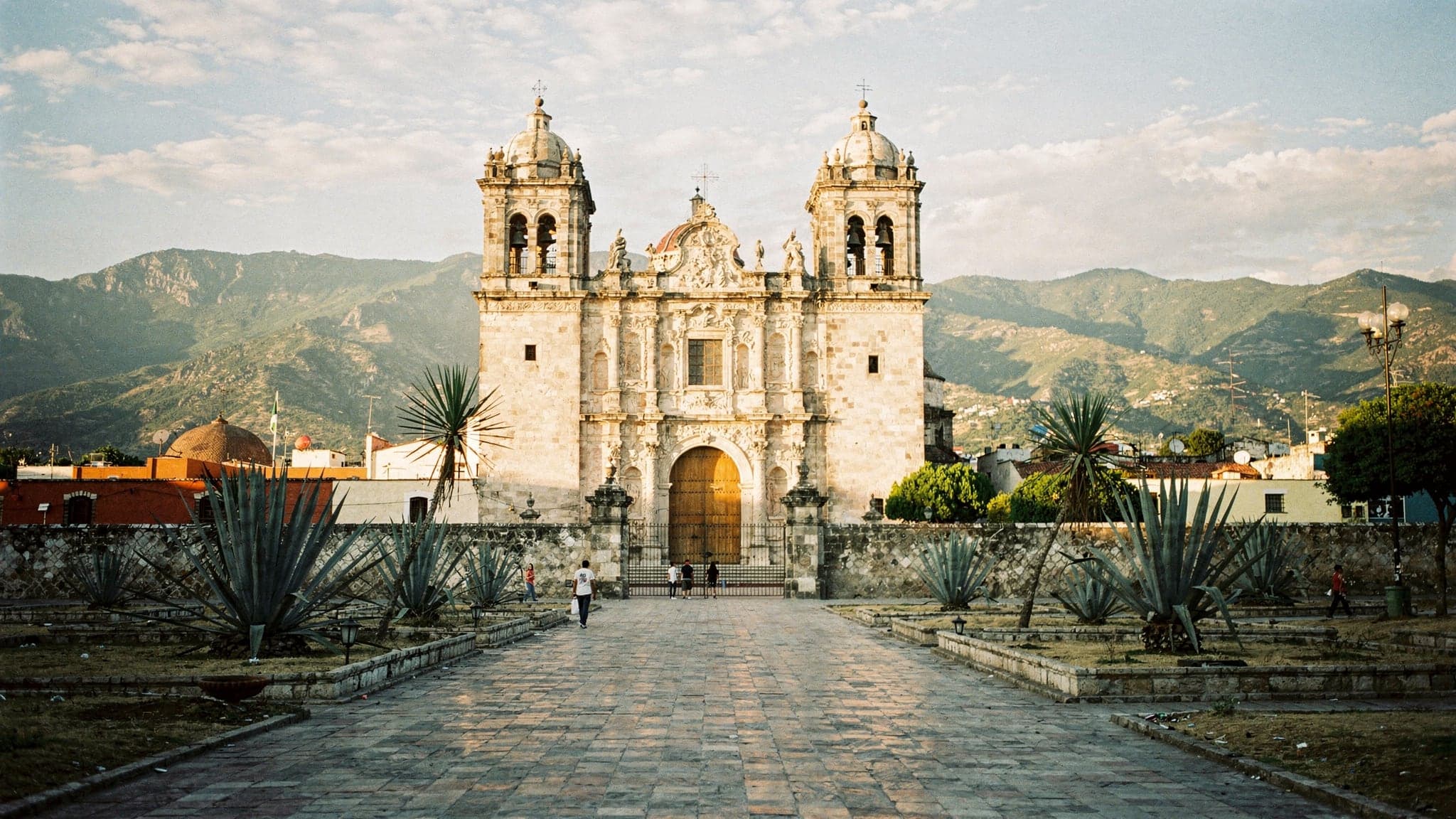
The centre is a grid of low colonial buildings painted in ochre and indigo, many of them built in the pale green stone quarried nearby. It shares a UNESCO World Heritage listing with Monte Albán, the Zapotec capital on a levelled mountaintop just west of town, founded around 500 BC.
Oaxaca is known for its seven moles and for most of Mexico's mezcal, distilled in family palenques in the valleys. Tlayudas are grilled over charcoal, and hot chocolate is ground with cinnamon and almonds. Its big festivals belong to the community first. The Guelaguetza in July and Día de Muertos at the start of November welcome visitors, and they fill hotels months ahead.
The Pacific is closer than it used to be, too. Since a new highway opened in 2024, Puerto Escondido is about two and a half hours away, so a week can hold ruins, markets, mezcal country and a few days of surf.
The lay of the land
The historic centre is compact and flat. The Zócalo and the Alameda beside the cathedral form its hub. Four blocks north of the cathedral, the pedestrian Andador Macedonio Alcalá ends at the church and former monastery of Santo Domingo, with the Museo de las Culturas inside and the ethnobotanical garden behind. The two big food markets, Benito Juárez and 20 de Noviembre, sit just south of the Zócalo. The Central de Abastos, the big wholesale market, lies further west.
East of the centre, Jalatlaco is one of the oldest barrios, all cobbles and murals. To the north, the quiet barrio of Xochimilco follows the arches of the colonial aqueduct. The Cerro del Fortín, where the Guelaguetza auditorium stands, rises on the north-west edge of town.
Beyond the city, three valleys fan out. Monte Albán stands on a ridge to the west. The Tlacolula valley runs east past the giant Tule tree, the weaving village of Teotitlán del Valle, the market town of Tlacolula, the ruins of Mitla and the mezcal town of Santiago Matatlán, with Hierve el Agua in the hills beyond, about 70 km from the city. South, across the Sierra Madre del Sur, lies the coast: Puerto Escondido, then the beach villages of Mazunte and Zipolite, and Huatulco further east.
Areas at a glance
Centro Histórico$$$$
The UNESCO-listed grid around the Zócalo and the pedestrian Andador Macedonio Alcalá
Best for: First visits, festivals on foot, museums
Jalatlaco$$$$
One of the city's oldest barrios, with cobbled lanes, murals and small guesthouses
Best for: Couples, cafés, quieter nights near the centre
Xochimilco$$$$
A quiet barrio north of Santo Domingo along the arches of the colonial aqueduct
Best for: Longer stays, walkers
Reforma$$$$
Residential streets north of the centre with neighbourhood restaurants
Best for: Local life, food
Puerto Escondido (coast)$$$$
Surf town with the big-wave beach of Zicatela and calmer coves nearby
Best for: Surfers, beach time after the city
Mazunte and San Agustinillo (coast)$$$$
Small beach villages east of Puerto Escondido with cabañas and sunset headlands
Best for: Slow beach days, budget travellers
When to go
Oaxaca's climate is warmer than Mexico City's. At the national weather service's Oaxaca station, average highs run from about 29°C in winter to 35°C in April, and lows from 10°C to 17°C.
The dry season lasts from November to April. October to early December is the best stretch, with clear skies and the countryside still green after the rains. By April the valleys are hot and dusty. The rains arrive in May and peak in June, with 188 mm on average, and September is nearly as wet. Storms usually come in the afternoon, so mornings stay usable.
Two festivals shape the year. The Guelaguetza is held on the two Mondays after 16 July, the Lunes del Cerro, with dance delegations from across the state in the open-air auditorium on the Cerro del Fortín. In 2026 it fell on 20 and 27 July; 2027 should follow the same rule, putting it on 19 and 26 July, but the state had not confirmed dates at the time of writing. Día de Muertos runs from 31 October to 2 November, with ofrendas in homes and markets, comparsas through the barrios and candlelit vigils in the cemeteries. The Xoxocotlán vigil, on the night of 31 October, is the best known.
On 23 December, the Noche de Rábanos fills the Zócalo with carved radishes. Semana Santa falls on 21 to 28 March in 2027. On the coast, the Pacific hurricane season runs from mid-May to November; Hurricane Erick made landfall on the Oaxacan coast in June 2025.
Oaxaca month by month
Best: Nov. Bars show our 1–5 rating; numbers are average daily highs in °C. The outlined bar is this month.
Month-by-month table
| Month | Rating | High / low °C | Rain mm | Note |
|---|---|---|---|---|
| January | 4/5 | 29 / 10 | 2 | Dry and sunny with cool nights; New Year crowds from across Mexico |
| February | 4/5 | 31 / 12 | 5 | Dry and quieter; a good month to add the coast |
| March | 4/5 | 33 / 14 | 18 | Heat builds; Semana Santa falls on 21–28 March in 2027 |
| April | 3/5 | 35 / 16 | 47 | Hottest month; dusty valleys before the rains |
| May | 3/5 | 34 / 17 | 98 | First storms; teachers' protests and blockades often begin |
| June | 2/5 | 31 / 17 | 188 | Wettest month; Pacific hurricane season under way on the coast |
| July | 4/5 | 30 / 16 | 119 | Guelaguetza on the two Mondays after 16 July (expected 19 and 26 July 2027) |
| August | 3/5 | 30 / 16 | 132 | Green valleys, afternoon showers and fewer visitors |
| September | 2/5 | 29 / 16 | 164 | Rainy; peak hurricane risk on the coast |
| October | 4/5 | 29 / 15 | 63 | Rains taper off; marigold fields bloom ahead of Día de Muertos |
| November | 5/5 | 29 / 12 | 9 | Día de Muertos from 31 October to 2 November; book months ahead |
| December | 4/5 | 29 / 11 | 9 | Noche de Rábanos radish-carving contest on 23 December; holiday crowds |
October to early December and February to March are the sweet spots: dry, sunny days near 29°C and cool nights. Late October into November brings Día de Muertos and July brings the Guelaguetza, and both need bookings months ahead. June and September are the wettest months, and the Pacific coast carries hurricane risk from mid-May to November.
What it costs
Oaxaca is noticeably cheaper than Mexico City. Prices below were checked in October 2026, at about MXN 18.4 to the US dollar. Crowd-sourced data on Numbeo puts a meal at an inexpensive restaurant at about MXN 165, a three-course dinner for two at a mid-range restaurant at about MXN 600 before drinks, and a city bus at MXN 8.50. A tlayuda from a street grill costs roughly MXN 100 to 160.
The big archaeological sites follow INAH's 2026 pricing: MXN 210 for foreign visitors at Monte Albán, Mitla and the Museo de las Culturas, and MXN 105 for Mexicans and residents. Smaller sights are cheap. Entry to the churchyard around the Tule tree costs MXN 20, and Hierve el Agua charges two community fees of MXN 20 and MXN 50, plus MXN 50 to park.
Rooms are the variable. A three-star double usually costs MXN 1,100 to 1,800, but prices jump and minimum stays appear during the Guelaguetza and Día de Muertos. The state's lodging tax adds 3 percent. Paid Guelaguetza seats cost MXN 1,632 (Palco A) and MXN 1,321 (Palco B) plus fees in 2026, while Palcos C and D were free.
Loading tool…
What a day costs
Shoestring
$35
per person, per day, no flights
Mid-range
$110
per person, per day, no flights
Luxury
$350
per person, per day, no flights
Shoestring buys a hostel bed, market meals and tlayudas, shared colectivo taxis and one INAH site a day. Mid-range covers half a double in a restored colonial hotel, a sit-down mole dinner, taxis and a guided valley day trip. Luxury means a boutique or former-convent hotel, tasting menus and a private driver for mezcal country or the coast.
| Item | Local price | ≈ USD | Note |
|---|---|---|---|
| Cappuccino at a café | MXN 50–65 | $3 | Numbeo median about MXN 50 (crowd-sourced, October 2026) |
| Beer in a bar or cantina | MXN 40–60 | $2.7 | |
| Tlayuda from a street stall | MXN 100–160 | $7 | |
| Mid-range dinner for two with drinks | MXN 800–1,400 | $60 | Numbeo median MXN 600 before drinks |
| City bus ride | MXN 8.50–10 | $0.5 | |
| Private taxi from the airport to the centre | MXN 250–350 | $16 | Shared airport vans about MXN 135 per person |
| Hostel dorm bed | MXN 250–400 | $18 | |
| Three-star double room | MXN 1,100–1,800 | $80 | Rises sharply for the Guelaguetza and Día de Muertos |
| Monte Albán ticket | MXN 210 | $11.4 | Foreign visitors; MXN 105 for nationals and residents |
| Hierve el Agua community fees | MXN 70 plus MXN 50 parking | $3.8 | MXN 20 at San Lorenzo and MXN 50 at San Isidro; cash only |
| Guelaguetza seat, Palco A | MXN 1,632 plus fees | $89 | 2026 price; Palcos C and D are free, first come first served |
| First-class bus from Mexico City | MXN 700–1,900 | $70 | Depends on class and how early you book |
| Telcel prepaid 30-day data package | MXN 270 | $15 |
Prices verified Oct 12, 2026. Exchange rates move; treat USD as a guide.
Build a budget for OaxacaGetting there and around
From Mexico City, flights take about 1 hour 10 to 1 hour 20 minutes on Aeroméxico, Volaris and VivaAerobus. By road, first-class ADO buses leave the TAPO terminal for a journey of about 6.5 to 7 hours, with fares from about MXN 700 to 1,900 depending on class and how early you book. Night buses save a hotel night, but Smartraveller advises using only first-class services and notes that crime on intercity buses is higher after dark.
Oaxaca's airport is about 20 to 30 minutes south of the centre. Shared vans cost about MXN 135 per person and a private taxi roughly MXN 250 to 350. Uber and DiDi private cars do not operate here, so you use licensed taxis. Agree the fare before you get in, or try TaxSí, the state's taxi-hailing app launched in 2026.
In town, you walk. City buses cost about MXN 8.50 to 10. Shared colectivo taxis run to valley towns such as Tule, Tlacolula and Mitla, and shuttles to Monte Albán leave from the lobby of the Hotel Rivera del Ángel at Calle Mina 518. A rental car makes the valleys easy. Drive in daylight and watch for topes, the speed bumps that guard every village.
The coast trip changed in 2024. The Barranca Larga–Ventanilla highway, opened on 4 February 2024, cut the drive to Puerto Escondido from more than six hours to about two and a half. In 2026, a car pays about MXN 490 at its two toll booths. ADO runs buses on the new road, and small planes fly from Oaxaca to Puerto Escondido in about 35 to 45 minutes. The old Highway 175, via San José del Pacífico and Pochutla, still takes six to seven hours of mountain curves.
Arriving and moving around
- OAXAeropuerto Internacional de Oaxaca (Xoxocotlán). To the centre: 20–30 min to the centre: shared airport vans about MXN 135 per person, private taxi about MXN 250–350
- PXMAeropuerto Internacional de Puerto Escondido. To the centre: For the coast; small planes from Oaxaca take 35–45 min, or drive about 2.5 hours via the Barranca Larga–Ventanilla highway
- HUXAeropuerto Internacional de Bahías de Huatulco. To the centre: For Huatulco, Mazunte and Zipolite; Mazunte is about an hour west by road
The centre is flat and compact, so you will walk most of the time. Uber and DiDi private cars do not operate in Oaxaca; use licensed taxis, agree the fare before you get in, or try TaxSí, the state's taxi-hailing app launched in 2026. City buses cost about MXN 8.50–10. Shared colectivo taxis serve valley towns such as Tule, Tlacolula and Mitla, and shuttles to Monte Albán leave from Calle Mina 518. A rental car makes the valleys easy, but drive in daylight and watch for topes, the unmarked speed bumps.
Where to stay
Stay in the Centro for a first visit, ideally in the blocks around Santo Domingo and the Andador Macedonio Alcalá. You can walk to everything, which matters during festivals when roads close. The Zócalo itself is lively, but protest encampments, brass bands and fireworks run late, so light sleepers should stay a few blocks away.
Jalatlaco, ten minutes' walk east, suits couples who want cafés and guesthouses on quiet cobbled lanes. Xochimilco, north of Santo Domingo, is calmer still and good for longer stays. Avoid the streets around the Central de Abastos after dark.
For the Guelaguetza and Día de Muertos, book three to six months ahead and check minimum stays.
On the coast, Puerto Escondido splits by beach. Rinconada is quieter and more residential, Zicatela is the surf and bar strip, and La Punta at its southern end draws a younger, budget crowd. Further east, Mazunte and San Agustinillo are small villages of cabañas and guesthouses, and Zipolite is a clothing-optional beach with a party streak.
Places we'd book
- Check rates
Casa Angel HostelBudgetCentro Histórico
A long-running hostel with dorms and private rooms, a garden and a terrace, a few blocks from the Andador.
- Check rates
Hotel Las GolondrinasMid-rangeCentro Histórico
A family-run hotel on Tinoco y Palacios with simple rooms arranged around planted courtyards, close to Santo Domingo.
- Check rates
Hotel Marqués del ValleMid-rangeZócalo
A traditional hotel on the main square between the cathedral and the Zócalo cafés; ask for a room away from the square if you sleep lightly.
- Check rates
Casa OaxacaLuxuryCentro Histórico
A small boutique hotel in a colonial house on García Vigil, linked to chef Alejandro Ruiz, with a courtyard pool and restaurant.
- Check rates
Quinta Real OaxacaSomething differentCentro Histórico
Rooms around the cloisters and gardens of the former convent of Santa Catalina de Siena, founded in the 16th century, a short walk from Santo Domingo.
What to do
Begin at Santo Domingo and take your time over the church's gilded interior. The former monastery next door houses the Museo de las Culturas de Oaxaca (MXN 210, Tuesday to Sunday 9 am to 5 pm), where the star is the Mixtec gold and carved bone from Tomb 7 at Monte Albán. Behind it, the Jardín Etnobotánico replants the monastery orchard with cacti, agaves and trees from across the state, and you can enter only on a guided tour.
Monte Albán opens daily from 8 am to 5 pm, with last entry at 4 pm. Go early. The Gran Plaza, the ball court and the carved danzante figures sit on a mountaintop with almost no shade, and the views over three valleys are best in the soft morning light. Shuttles from Calle Mina are cheap; agree the return time when you buy the ticket. A local guide adds a lot.
Give the Tlacolula valley a full day, ideally a Sunday. Start at the Árbol del Tule, a cypress with one of the stoutest trunks of any tree on earth. Continue to Teotitlán del Valle, where Zapotec families weave rugs coloured with cochineal and indigo. Then go to the Tlacolula Sunday market for barbacoa and tejate, and end at Mitla, whose stone walls are covered in geometric fretwork.
Hierve el Agua, about two hours from the city, is a set of mineral springs that have built petrified waterfalls down a cliff, with pools at the edge. It is community-run and cash-only, and access depends on a long-running dispute between neighbouring communities. In October 2025, the state government said the site would not reopen until they made peace; during 2026, visitors reported paying entry fees again. Check recent reports before you set off.
Mezcal country centres on Santiago Matatlán, about an hour from the city. At a family palenque, you see agave hearts roasted in earth pits, crushed by a horse-drawn stone wheel (the tahona) and fermented in wooden vats before distillation.
At the coast, watch the surfers at Zicatela in Puerto Escondido and swim at the coves of Carrizalillo or Puerto Angelito. In Mazunte, walk to Punta Cometa for sunset. Plan at least two nights: the highway run is about 2.5 hours each way, but the old Highway 175 route takes 6–7 hours if the new road is closed, and a day trip leaves no time for the water.
The shortlist
Monte AlbánSee
The Zapotec capital on a levelled mountaintop above the city, founded around 500 BC, with a vast plaza, ball court and carved danzante stones.
MXN 210 for foreign visitors; daily 8 am to 5 pm, last entry 4 pm; shuttles from Calle Mina 518
Book ticketsSanto Domingo and the Museo de las CulturasSee
A gilded 16th–17th century church beside a former monastery that now holds the Mixtec gold of Monte Albán's Tomb 7.
Church free; museum MXN 210, Tuesday to Sunday 9 am to 5 pm
Jardín EtnobotánicoSee
The former monastery orchard behind Santo Domingo, replanted with cacti, agaves and trees from across the state; visits are by guided tour only.
Guided tours only; English-language tours have run at 11 am Monday to Saturday; check at the gate
Mercado 20 de Noviembre and the pasillo de humoEat
Pick tasajo, cecina enchilada or chorizo by weight in the smoky meat hall, have it grilled, then add tortillas, salsas and onions from the vendors around you.
Two blocks south of the Zócalo; lunchtime is busiest; cash
Tlacolula valley day tripDay trip
The great Tule tree, the weaving village of Teotitlán del Valle and the stone fretwork of Mitla, ideally timed for Tlacolula's Sunday market.
Tule churchyard MXN 20; Mitla MXN 210; Tlacolula market on Sundays
Hierve el AguaDay trip
Mineral springs have built petrified waterfalls down a cliff, with natural pools at the edge looking over the Sierra.
About two hours each way; MXN 20 plus MXN 50 in community fees and MXN 50 parking, cash only; access depends on a local dispute
Book ticketsMezcal country around Santiago MatatlánExperience
Visit family palenques where agave hearts roast in earth pits and are crushed by a stone tahona before fermentation and distillation.
About an hour from the city; go with a guide or driver; tip the host and buy a bottle if you taste
Book ticketsGuelaguetzaExperience
Delegations from the state's regions dance in the hillside auditorium on the Cerro del Fortín, with parades (convites) through the centre.
Two Mondays after 16 July; 2026 seats were MXN 1,632 (Palco A) and MXN 1,321 (Palco B); Palcos C and D free
Día de MuertosExperience
Ofrendas in homes and markets, comparsas (costumed parades) through the barrios and candlelit cemetery vigils, including Xoxocotlán on the night of 31 October.
31 October to 2 November; book rooms months ahead; ask before photographing families at graves
Puerto Escondido and MazunteDay trip
The Pacific coast is now a short trip: big surf at Zicatela, swimming coves at Carrizalillo and Puerto Angelito, and sunsets from Punta Cometa in Mazunte.
About 2.5 hours by the new highway, about 6–7 hours via Highway 175; plan at least two nights
Book tickets
Eat and drink
Oaxacans eat a big breakfast, a main meal between 2 and 5 pm and a light supper, often a tlayuda or a snack from a street grill.
Start with mole. Mole negro, the darkest of the seven classics, gets its colour from toasted chillies and chocolate. Las Quince Letras, on Abasolo, where chef Celia Florián has cooked since 1992, serves it alongside several other moles. For tlayudas, the large crisp tortillas spread with asiento, beans and quesillo and grilled over coals, Tlayudas Libres, Doña Martha's stand on Calle Libres, is an evening institution.
Lunch in the pasillo de humo, the smoke-filled meat hall of the Mercado 20 de Noviembre. You choose tasajo (thin salted beef), cecina enchilada (chilli-rubbed pork) or chorizo by weight, a cook grills it, and vendors around you sell tortillas, salsas, guacamole and grilled onions. In the Mercado Benito Juárez next door, Nieves Chagüita, at stall 27, scoops hand-churned ices; try leche quemada, burnt milk, or tuna, prickly pear.
Chocolate here is a drink. On Calle Mina, mills such as Chocolate Mayordomo, founded in 1956, grind cacao with sugar, cinnamon and almonds; drink it whisked with water or milk alongside pan de yema. Market stalls ladle out tejate, a cold, frothy maize-and-cacao drink, from painted gourds. Toasted chapulines, grasshoppers with lime and chilli, are a crunchy bar snack.
For native corn, Itanoní in Colonia Reforma makes tetelas and memelas from heirloom maize. For mezcal, In Situ, the bar founded by mezcal writer Ulises Torrentera, pours from a long list of small producers; ask for a flight across agave species.
Order this
Mole negro
The darkest of Oaxaca's moles, built on toasted chilhuacle chillies, chocolate and dozens of spices, usually over chicken.
Try it at: Las Quince Letras, Abasolo 300, chef Celia Florián (since 1992)
Tlayuda
A large, thin, crisp tortilla spread with asiento (pork lard), beans and quesillo, topped with tasajo or chorizo and grilled over charcoal.
Try it at: Tlayudas Libres (Doña Martha), Calle Libres, in the evening
Tasajo and cecina enchilada
Thin-sliced salted beef and chilli-rubbed pork grilled to order in the market's smoke hall.
Try it at: Pasillo de humo, Mercado 20 de Noviembre
Hot chocolate
Cacao stone-ground with sugar, cinnamon and almonds, whisked with water or milk and served with pan de yema.
Try it at: The chocolate mills on Calle Mina, including Chocolate Mayordomo (founded 1956)
Nieves
Hand-churned sorbets and ices in flavours such as leche quemada (burnt milk) and tuna (prickly pear).
Try it at: Nieves Chagüita, Mercado Benito Juárez, stall 27
Tetelas and memelas
Triangles and rounds of native-corn masa, filled or topped with beans, cheese and salsas.
Try it at: Itanoní, Belisario Domínguez 513, Colonia Reforma
Tejate
A cold, frothy drink of maize, cacao, mamey seed and cacao flower, ladled from painted gourds in markets.
Try it at: Market stalls at Mercado 20 de Noviembre, Benito Juárez and Tlacolula
Mezcal
Agave spirit from roasted, crushed and distilled agave hearts, from everyday espadín to wild tobalá and tepeztate.
Try it at: In Situ Mezcalería, a long-running bar founded by mezcal writer Ulises Torrentera
Practicalities
Money. Oaxaca runs on cash more than Mexico City. Restaurants and hotels take cards, but markets, colectivos, community sites and palenques mostly do not, and ATMs thin out beyond the city. Use machines inside bank branches and always pay in pesos.
Data. Telcel has the best coverage in the mountains and on the coast. A 30-day Amigo Sin Límite package costs about MXN 270.
Water. Do not drink the tap water. Hotels provide filtered water or bottles.
Power. 127 V, 60 Hz, with US-style type A and B sockets.
Safety. The US rates Oaxaca state Level 2, exercise increased caution, and places no restrictions on Oaxaca City, Monte Albán, Puerto Escondido or Huatulco. Its staff may not use Highway 200 between Pinotepa and the Guerrero border or travel to parts of the Isthmus, including Juchitán and Salina Cruz. Smartraveller advises expecting protests and roadblocks in the state. Take normal city care with phones and bags, and avoid night driving.
Etiquette. Greet people with "buenos días" or "buenas tardes". During Día de Muertos, the cemeteries are family gatherings: ask before photographing anyone, skip the flash and never step on graves. Dress modestly in churches.
LGBTQ+. Same-sex marriage has been legal in Oaxaca since 2019. The city is generally relaxed, though rural communities are more conservative, and Zipolite on the coast is popular with LGBTQ+ travellers.
Accessibility. The centre is flat but cobbled, with narrow pavements and high kerbs. Monte Albán and Mitla involve steep, uneven stone stairs.
Phrases. "¿Cuánto cuesta?" (how much is it?), "¿Me lo puede envolver?" (can you wrap it?), "Un poco menos picante" (a bit less spicy), "La cuenta, por favor" (the bill, please).
Entry rules by passport
| Passport | Rule | Max stay | Notes | Checked |
|---|---|---|---|---|
| United States | Visa-free | Up to 180 days; the immigration officer sets the exact number | A passport book is needed to fly (a passport card is not accepted for air travel). Air arrivals get a digital FMM (FMMd): your passport is stamped or you pass an e-gate that prints a QR receipt showing your permitted days. Officers can ask for a return ticket, accommodation details and proof of funds. The visitor fee is normally included in your air fare. | Oct 12, 2026 |
| United Kingdom | Visa-free | Up to 180 days; the stamp shows the days you are allowed | Passport must be valid for your whole stay (Mexico's embassy recommends 180 days' validity). E-gate users must keep the printed ticket to show on departure and can download proof of entry from the INM portal within 60 days. Expect questions about onward travel, accommodation and funds. | Oct 12, 2026 |
| EU/Schengen | Visa-free | Up to 180 days; the immigration officer sets the exact number | All 27 EU states plus Iceland, Liechtenstein, Norway and Switzerland are on Mexico's visa-exempt list for tourism. Air arrivals receive the digital FMM via a passport stamp or e-gate receipt. Carry proof of onward travel and accommodation. | Oct 12, 2026 |
| Canada | Visa-free | Up to 180 days, not granted automatically | Complete the digital FMM on arrival by air; an officer stamps your passport or an e-gate prints a receipt with your days. You cannot extend a visitor stay from inside Mexico, and overstaying brings fines or detention. Carry the FMMD receipt or stamped passport as proof of status. | Oct 12, 2026 |
| Australia | Visa-free | Up to 180 days, usually matched to the trip you describe | Chipped passport holders aged 18+ travelling for tourism can use e-gates at major airports and get a printed QR code showing permitted days. Otherwise you receive a stamped visitor permit on arrival. The 180 days are not guaranteed, and the stay cannot be extended. | Oct 12, 2026 |
Entry rules change without notice. Confirm with the official source linked in the Checked column before you travel.
Safety: 4/5
The US rates Oaxaca state Level 2, exercise increased caution, but places no travel restrictions on Oaxaca City, Monte Albán, Puerto Escondido or Huatulco. Its staff may not use Highway 200 between Pinotepa and the Guerrero border or visit parts of the Isthmus, including Juchitán and Salina Cruz. For visitors, the practical risks are petty theft, road blockades by protesters, night driving on mountain roads and strong rip currents on the coast.
- Taxis quoting inflated fares to visitors; agree the price before you get in.
- Valley tours padded with long stops at shops and tasting rooms that pay commission.
- Unofficial Guelaguetza seat resellers; paid seats are sold through the official platform.
- Card skimmers on standalone ATMs; use machines inside bank branches.
- Card terminals that offer to charge you in dollars; always choose pesos.
- Drivers who try to talk their way through a road blockade; wait or turn back.
Fast facts
- Currency
- Mexican peso (MXN)
- Languages
- Spanish, Zapotec, Mixtec and other Indigenous languages
- Plugs
- Type A, B, 127 V, 60 Hz
- Time zone
- Mexico City (GMT-6)
- Tap water
- Drink bottled or filtered
- Tipping
- 10–15% in sit-down restaurants; tip palenque hosts and guides in cash; small change for market helpers and parking attendants.
- Driving
- On the right
- Emergency
- 911
- Dialing code
- +52
- Safety
- 4/5
What nobody tells you
Protests are part of daily life. The Sección 22 teachers' union has a long tradition of occupying the Zócalo and blocking roads, especially from mid-May into June, and in 2026 it blocked access to the airport on several days. Visitors are rarely in danger, but a blockade can cost you a flight.
Festival weeks are a different city. During the Guelaguetza and Día de Muertos, rooms cost far more, restaurants need bookings, and the most famous cemetery vigils draw crowds of visitors with phones held high. If you want the quieter version, visit smaller village cemeteries with a local guide, or come in the week after.
April and May are hot. Valley temperatures pass 34°C, the countryside is brown, and the sun at 1,555 metres burns fast. Bring a hat for Monte Albán.
Hierve el Agua looks bigger in photos. The pools are small, the drive is long and winding, and at midday on weekends you share it with every tour van in the valley. Go early on a weekday, and only after checking that it is open.
Some tours sell more than they show. Day trips that promise Tule, Teotitlán, Mitla, Hierve el Agua and a mezcal tasting in one go spend most of the day in the van, with commission stops along the way. Two shorter days are better.
Mezcal is stronger than it tastes, and the popular espadín agave is farmed, but wild species are over-harvested in some areas. Drink slowly, alternate with water, and ask producers how they source their agave.
Insider tips
- Buy chocolate on Calle Mina, where the mills grind cacao with sugar, cinnamon and almonds while you wait; a 120 g bar at Mayordomo costs about MXN 60.
- Be at Monte Albán for the 8 am opening; the mountaintop has almost no shade, and tour buses arrive mid-morning.
- Carry small notes for Hierve el Agua, village markets and palenques; ATMs are scarce outside the city.
- Time a Tlacolula valley day for Sunday, when the Tlacolula tianguis fills the streets with barbacoa, tejate and village traders.
- For the Guelaguetza, the free Palcos C and D are first come, first served; arrive early with water, a hat and patience.
- Before an airport or highway day in May or June, check local news for teachers' union blockades and leave extra time.
- On the coast, swim at Carrizalillo or Puerto Angelito; leave Zicatela to experienced surfers.
Skip it
- Swimming at Zicatela in Puerto Escondido; its rip currents are among the strongest on the coast.
- All-in-one valley tours that rush Tule, Teotitlán, Mitla, Hierve el Agua and a mezcal stop into one day.
- Driving mountain highways after dark, including Highway 175 to the coast; Smartraveller advises against night travel outside major cities.
- Hierve el Agua at midday on weekends and holidays, when the small pools are packed.
- Booking a room on the Zócalo for sleep; protest encampments, brass bands and fireworks run late.
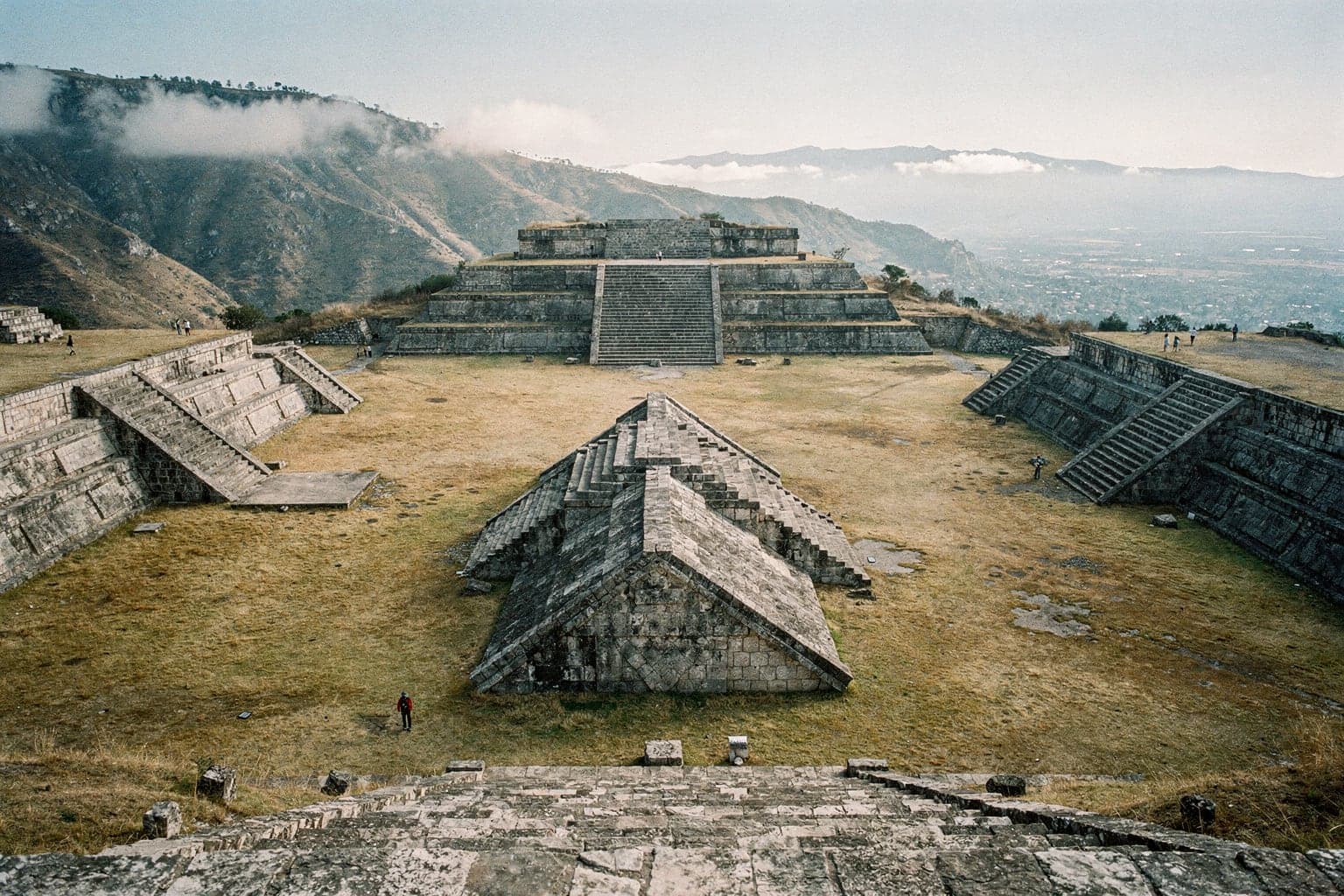
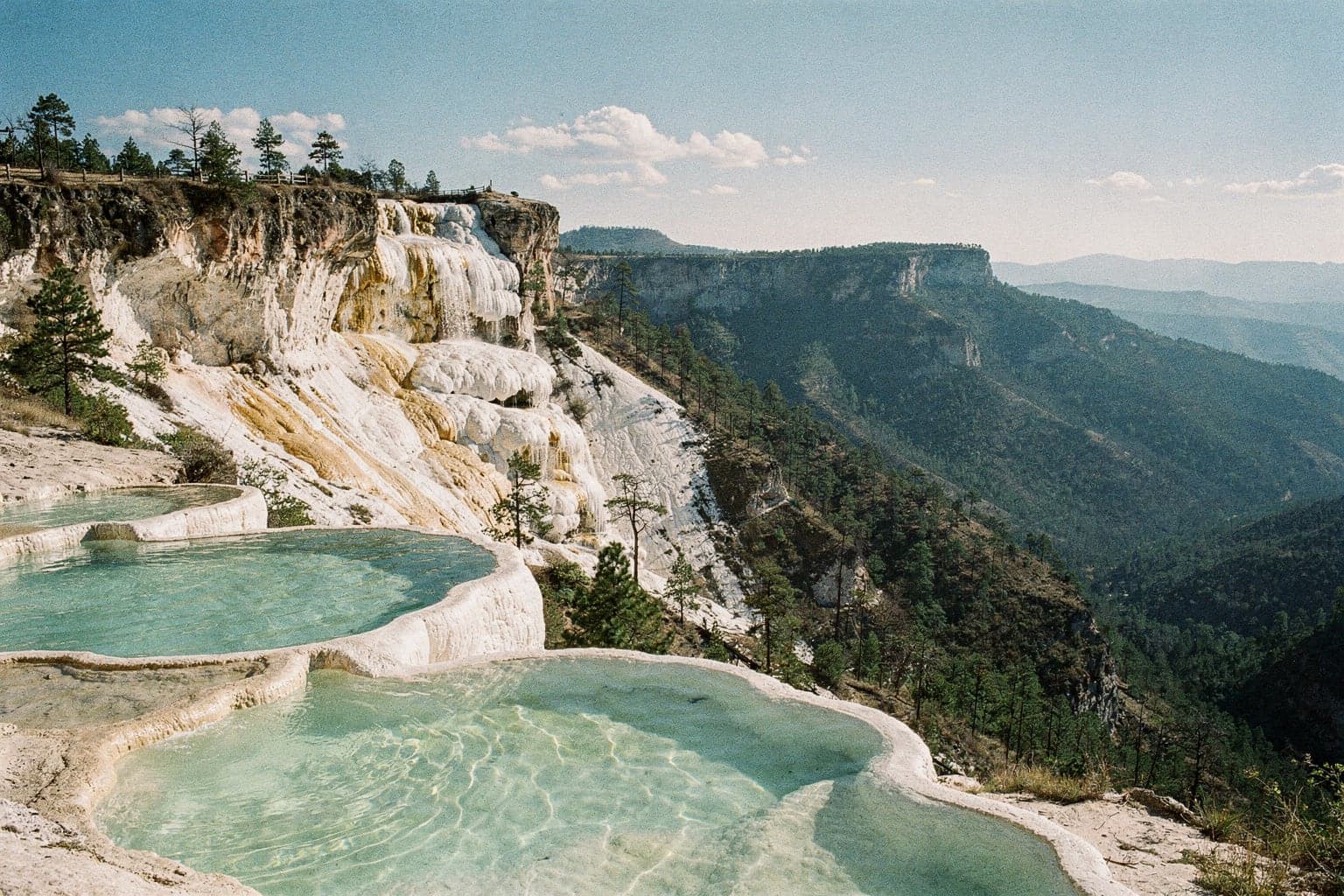
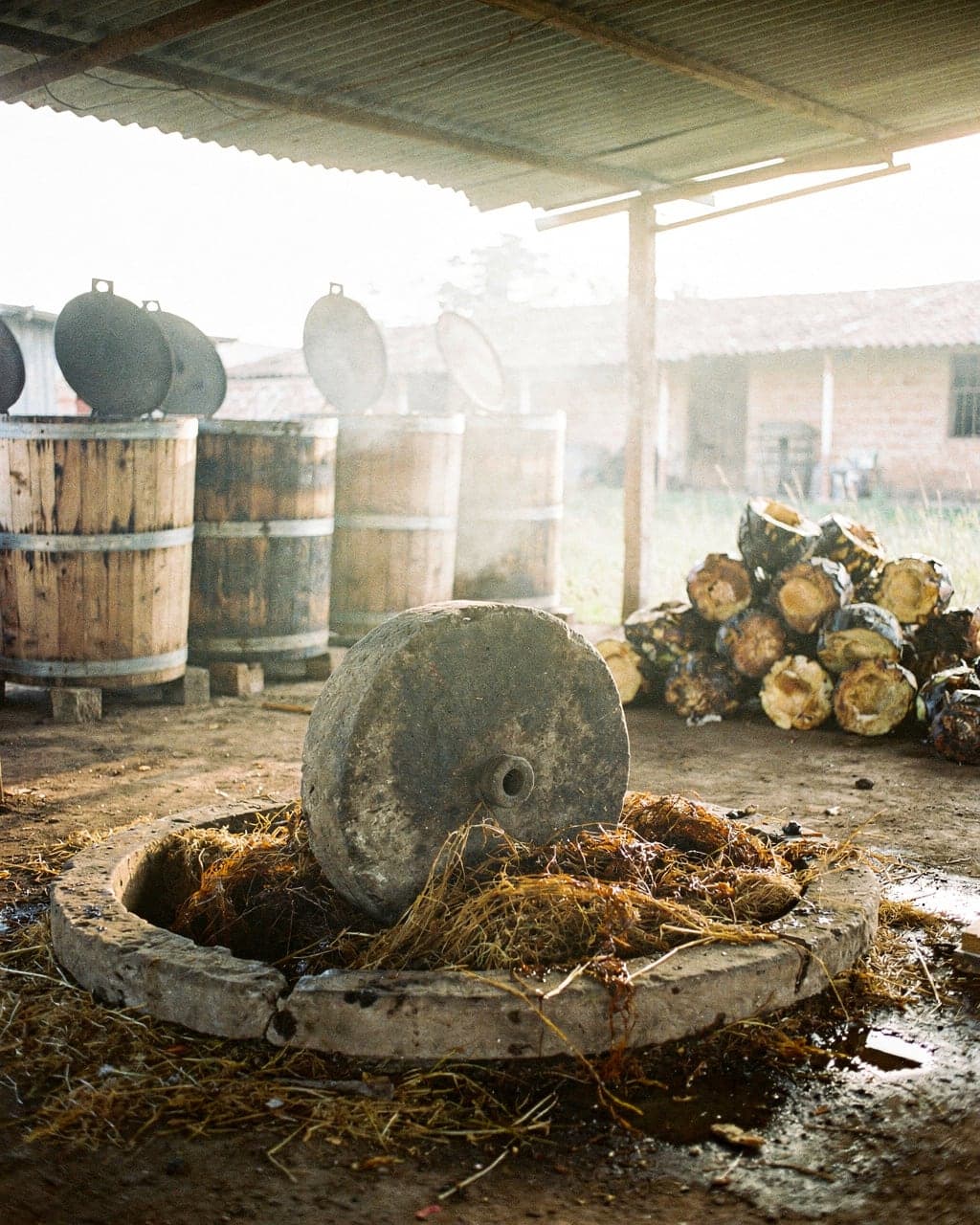
Illustration: Spike Travel (AI-assisted)
Questions people ask
Is Oaxaca safe for tourists?
Oaxaca City is one of Mexico's calmer destinations for visitors. The US rates Oaxaca state Level 2 (exercise increased caution) but places no restrictions on Oaxaca City, Monte Albán, Puerto Escondido or Huatulco. The practical risks are petty theft, protest blockades, night driving on mountain roads and rip currents on the coast.
How many days do I need in Oaxaca?
Plan four days for the city, Monte Albán and one valley day trip, and add two or three nights if you want the coast. During the Guelaguetza or Día de Muertos, allow extra time, because crowds slow everything down.
When is the Guelaguetza in 2027?
The Guelaguetza is held on the two Mondays after 16 July, so the 2027 dates are expected to be Monday 19 and Monday 26 July. The state government had not confirmed them at the time of writing; in 2026 the festival ran on 20 and 27 July.
How do I get from Mexico City to Oaxaca?
Fly in about 1 hour 10 to 1 hour 20 minutes on Aeroméxico, Volaris or VivaAerobus, or take a first-class ADO bus from the TAPO terminal, which takes about 6.5 to 7 hours. Bus fares range from about MXN 700 to 1,900 depending on class and how early you book.
How long does it take to get from Oaxaca to Puerto Escondido?
About 2.5 hours by car on the Barranca Larga–Ventanilla highway, which opened in February 2024. Local blockades occasionally close it, and the old route via Highway 175 takes six to seven hours. Small planes fly the route in about 35 to 45 minutes.
Can you swim at Hierve el Agua?
Yes, in the natural pools at the cliff edge, but they are small and crowded at midday. Access is managed by local communities, entry is cash only, and the site has closed at short notice during disputes, so check recent reports before you go.
Sources
Where the facts on this page come from. Dates show when we last checked each one.
- U.S. Department of State: Mexico travel advisory, including Oaxaca stateaccessed Oct 12, 2026
- GOV.UK: Mexico entry requirementsaccessed Oct 12, 2026
- Government of Canada: Travel advice and advisories for Mexicoaccessed Oct 12, 2026
- Smartraveller: Mexico travel adviceaccessed Oct 12, 2026
- Instituto Nacional de Migración: Países y regiones que no requieren visa para viajar a Méxicoaccessed Oct 12, 2026
- Instituto Nacional de Migración: Forma Migratoria Múltiple Digital (FMMd)accessed Oct 12, 2026
- Servicio Meteorológico Nacional: Normales climatológicas 1991–2020, station 20079 Oaxacaaccessed Oct 12, 2026
- Wikipedia: Oaxaca City (climate table citing SMN; 2020 census population; elevation)accessed Oct 12, 2026
- INAH Lugares: Monte Albán (hours and fees)accessed Oct 12, 2026
- INAH: Zona Arqueológica de Mitlaaccessed Oct 12, 2026
- Sistema de Información Cultural: Museo de las Culturas de Oaxacaaccessed Oct 12, 2026
- Visit Mexico: Lunes del Cerro, Guelaguetza 2026accessed Oct 12, 2026
- Infobae: Venta general para la Guelaguetza 2026 (seat prices)accessed Oct 12, 2026
- CAPUFE: Autopista Barranca Larga–Ventanillaaccessed Oct 12, 2026
- Monte Albán Heritage Center: Closure of the Oaxaca–Puerto Escondido highway, September 2026accessed Oct 12, 2026
- Casetas.com.mx: Autopista Oaxaca–Puerto Escondido tolls 2026accessed Oct 12, 2026
- ADO: Mexico City TAPO to Oaxaca bus ticketsaccessed Oct 12, 2026
- El Universal: Sección 22 blocks access to Oaxaca airport (May 2026)accessed Oct 12, 2026
- Oaxaca Hoy: Bloqueo de la Sección 22 afecta acceso al aeropuerto (June 2026)accessed Oct 12, 2026
- Monte Albán Heritage Center: Is Hierve el Agua open? (fees, January 2026)accessed Oct 12, 2026
- Gobierno de Oaxaca (SEGO): Hierve el Agua will not reopen until there is peace between communities (October 2025)accessed Oct 12, 2026
- NPR: Hurricane Erick makes landfall in Oaxaca (June 2025)accessed Oct 12, 2026
- Las Quince Letras: official siteaccessed Oct 12, 2026
- Chocolate Mayordomo: official siteaccessed Oct 12, 2026
- Mi Bolsillo: Oaxaca's Secretaría de Movilidad launches TaxSí (July 2026)accessed Oct 12, 2026
- Numbeo: Cost of living in Oaxaca (crowd-sourced, used as a sanity check)accessed Oct 12, 2026
If you like Oaxaca
Book Oaxaca
These links go to the booking sites we would use ourselves. Nothing here is currently sponsored.
Fast facts
- Currency
- Mexican peso (MXN)
- Languages
- Spanish, Zapotec, Mixtec and other Indigenous languages
- Plugs
- Type A, B, 127 V, 60 Hz
- Time zone
- Mexico City (GMT-6)
- Tap water
- Drink bottled or filtered
- Tipping
- 10–15% in sit-down restaurants; tip palenque hosts and guides in cash; small change for market helpers and parking attendants.
- Driving
- On the right
- Emergency
- 911
- Dialing code
- +52
- Safety
- 4/5
When to go
Best: Nov.
Good for
- Culture & history5/5
- Food & drink5/5
- Nature & scenery4/5
- Adventure3/5
- Beaches3/5
- Nightlife3/5
- Romance4/5
- Family-friendly4/5
- Value for money5/5
- Big-city energy2/5
- Slow & restorative4/5
- Wildlife2/5