Mexico, Central Mexico
Mexico City
Aztec stone, five-peso metro rides and tacos al pastor at 2,240 metres.
Illustration: Spike Travel (AI-assisted)

By Spike Travel Editorial Desk, Editorial team
Published Oct 12, 2026
Disclosure: This is a researched briefing compiled from official sources and published reporting. No part of it was hosted, sponsored or reviewed by any business or tourism board.
- Best time
- Mar, Nov
- Daily budget
- $45–450
- Safety
- 3/5
- Strongest for
- Culture & history, Food & drink, Nightlife
A high-altitude capital of nine million where Aztec ruins sit beside the cathedral, a metro ride costs five pesos and taquerías run past midnight. This briefing covers entry rules, the 2026 museum price rises, airport transfers after the World Cup, where to base yourself, Teotihuacán logistics and the honest downsides: altitude, smog, traffic and rain.
Why go
Mexico City asks for stamina and pays it back in detail. More than nine million people live inside the city limits and almost 22 million across the metropolitan area, on the drained bed of a highland lake 2,240 metres above sea level. The Mexica capital of Tenochtitlan stood here. Its main temple, the Templo Mayor, now lies excavated beside the cathedral that the Spanish built partly from its stones.
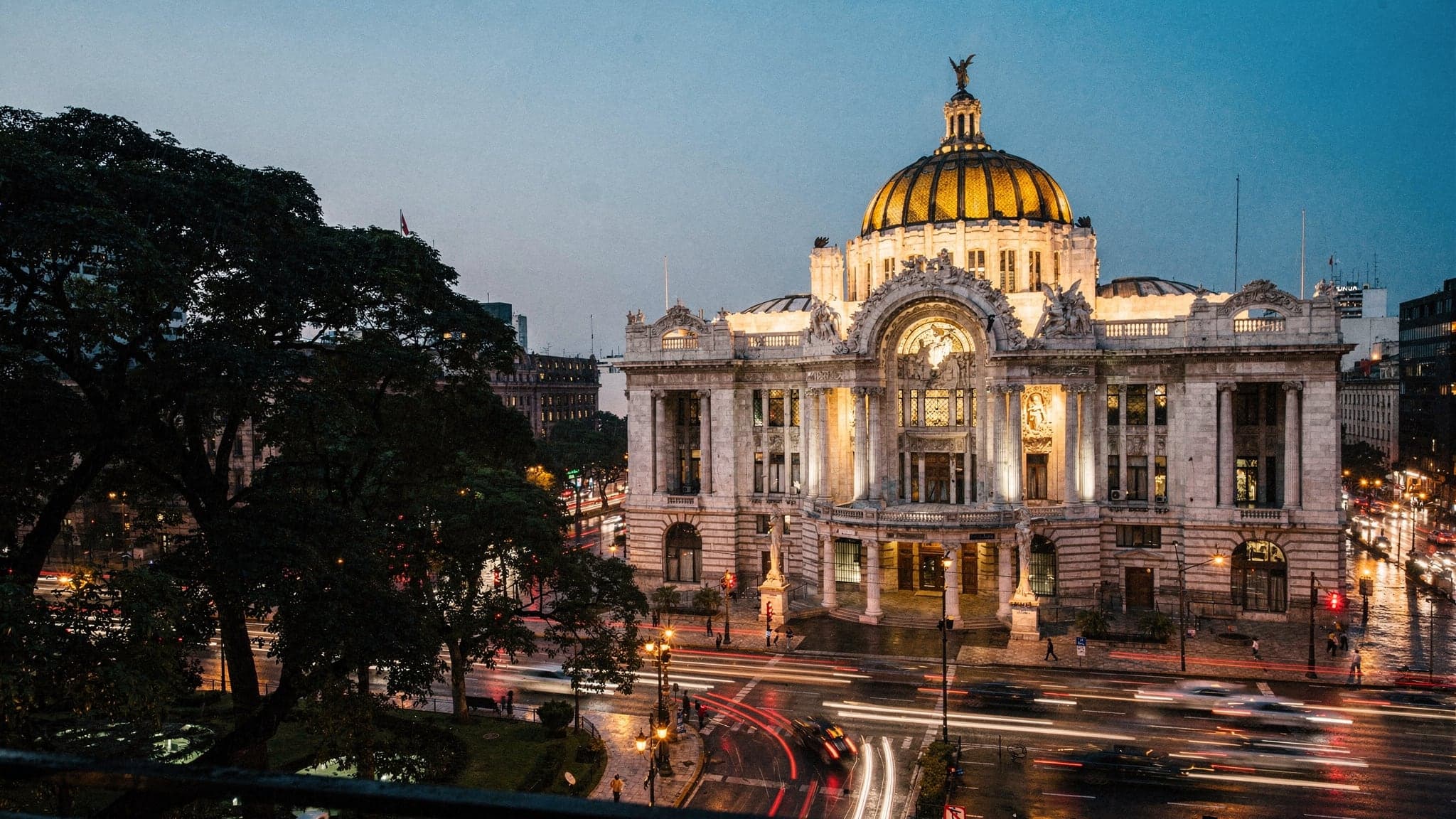
Within a 20-minute walk of the Zócalo you can see Diego Rivera's murals in the Palacio Nacional, the marble bulk of the Palacio de Bellas Artes, and a taquería that has carved tacos al pastor from a vertical spit since 1959. A Metro ride costs MXN 5, about 27 US cents. The National Museum of Anthropology, one of the finest museums in the Americas, charges foreign visitors MXN 210, about $11.
The 2026 FIFA World Cup opened at the Estadio Azteca in June and, by the city government's count, brought more than four million visitors. It left behind a rebuilt light-rail line to Xochimilco and a modernised Metro Line 2. The same boom has pushed rents up in Roma and Condesa, and residents marched against gentrification there in July 2025. The city is far bigger than the three neighbourhoods everyone photographs.
The lay of the land
The city spreads across 16 boroughs, called alcaldías, but most visitors stay in a compact band west and south of the old centre.
The Centro Histórico is the colonial grid around the Zócalo, the vast main square. The cathedral, the Templo Mayor and the Palacio Nacional line the square. Bellas Artes and the Alameda Central park sit about ten blocks west along pedestrianised Madero. Paseo de la Reforma runs south-west from there, past the golden Ángel de la Independencia, to Chapultepec, a forested park about twice the size of New York's Central Park that holds the Anthropology Museum and Chapultepec Castle.
South of Reforma lie Juárez, Roma Norte and Condesa. These are leafy streets of Art Deco apartments and early 20th-century mansions, with the cafés, bars and boutique hotels most visitors use as a base. Polanco, north of Chapultepec, is the district of embassies, hotel towers and designer shops. Far to the south, Coyoacán and San Ángel keep cobbled colonial cores, and Xochimilco keeps the last canals of the old lake system. The canals and the historic centre have shared a UNESCO World Heritage listing since 1987.
On a clear morning, the volcanoes Popocatépetl and Iztaccíhuatl appear on the south-eastern skyline. Use them, and the diagonal of Reforma, to keep your bearings.
Areas at a glance
Centro Histórico$$$$
The colonial grid around the Zócalo, Templo Mayor and Bellas Artes; busy by day, quieter at night
Best for: History, value, first-time sightseeing on foot
Roma Norte$$$$
Leafy streets of Art Nouveau mansions, cafés, galleries and bars
Best for: Food, nightlife, a walkable base
Condesa$$$$
Art Deco apartment blocks around Parque México and Parque España
Best for: Parks, morning runs, relaxed dining
Juárez and Zona Rosa$$$$
Between Reforma and Roma; restored mansions, LGBTQ+ nightlife, new restaurants
Best for: Central location, nightlife
Polanco$$$$
Embassies, hotel towers, designer shops and fine dining beside Chapultepec
Best for: Luxury, museums, business travel
Coyoacán$$$$
Cobbled colonial plazas, markets and the Casa Azul in the south
Best for: Families, slower stays, Frida Kahlo
When to go
Altitude sets the climate. Average highs stay between 22°C and 28°C all year and nights are cool, so the seasons are defined by rain.
The dry season runs from November to May. December and January bring sunny days and cold nights, with average lows of about 8.5°C at the national weather service's Tacubaya station, and many older buildings have no heating. March and April are the warmest months, and the jacarandas turn whole avenues purple. That same dry, still spring is ozone season, when the regional environmental commission (CAMe) can declare a contingencia ambiental and restrict driving.
From June to September, a heavy storm arrives most afternoons. July and August each average more than 170 mm of rain. Mornings are usually clear, so plan outdoor sights early and keep museums for the afternoon.
A few dates are worth planning around. The Día de Muertos parade runs from Chapultepec along Reforma to the Zócalo on Saturday 31 October 2026, and a monumental ofrenda fills the square; families visit cemeteries on 1 and 2 November. On the night of 15 September, the president gives the grito de independencia from the Palacio Nacional balcony. On 12 December, pilgrims pour into the Basílica de Guadalupe in the north of the city. Semana Santa, Holy Week, empties offices and fills the archaeological sites.
Mexico City month by month
Best: Mar, Nov. Bars show our 1–5 rating; numbers are average daily highs in °C. The outlined bar is this month.
Month-by-month table
| Month | Rating | High / low °C | Rain mm | Note |
|---|---|---|---|---|
| January | 4/5 | 22 / 9 | 12 | Dry and sunny with cold nights; rosca de reyes on 6 January |
| February | 4/5 | 24 / 10 | 6 | Driest month; winter haze on still mornings; Zsona Maco art fair |
| March | 5/5 | 26 / 11 | 12 | Jacaranda bloom; ozone season and air-quality alerts begin |
| April | 4/5 | 28 / 13 | 24 | Warmest month; Semana Santa crowds at museums and pyramids |
| May | 3/5 | 27 / 14 | 59 | Hot and hazy; ozone contingencias are most likely before the rains |
| June | 3/5 | 26 / 14 | 133 | Rainy season starts; clear mornings, afternoon storms; Pride march |
| July | 3/5 | 25 / 13 | 174 | Wettest stretch, with a downpour most afternoons |
| August | 3/5 | 25 / 13 | 176 | Chiles en nogada season begins; heavy afternoon rain |
| September | 3/5 | 24 / 13 | 158 | Independence grito on the night of 15 September in the Zócalo |
| October | 4/5 | 24 / 12 | 71 | Rains ease; Día de Muertos parade on Saturday 31 October 2026 |
| November | 5/5 | 23 / 10 | 17 | Día de Muertos on 1–2 November; dry and mild |
| December | 4/5 | 22 / 9 | 5 | Guadalupe pilgrimage on 12 December; posadas; cold nights |
Late October to April is the sweet spot: dry, sunny days of 22–27°C and cold nights, with Día de Muertos in early November and jacarandas in March. Spring is also ozone season, so check air quality. From June to September, mornings are usually clear and most afternoons bring a heavy storm.
What it costs
Mexico City is good value but no longer cheap where most visitors stay. Prices below were checked in October 2026, at about MXN 18.4 to the US dollar.
Transport and street food are the bargains. The Metro has cost MXN 5 since 2013, the Metrobús costs MXN 6, and an Ecobici day pass costs MXN 134. Tacos al pastor run roughly MXN 20 to 30 each. A comida corrida, the set lunch of soup, rice, a main course and agua fresca, costs around MXN 100 to 150 in a fonda. Crowd-sourced data on Numbeo puts a cappuccino at about MXN 68 and a three-course dinner for two at a mid-range restaurant at about MXN 900 before drinks.
Culture got dearer in 2026. Since 1 January, INAH, the national institute that runs the big archaeological sites and museums, has charged foreign visitors MXN 210 at its top sites, including Teotihuacán, the Templo Mayor, the Anthropology Museum and Chapultepec Castle. Mexican nationals and foreign residents pay MXN 105. The Frida Kahlo Museum charges MXN 320. Museums run by INBAL, the fine arts institute, kept their prices: Bellas Artes is MXN 95, and free on Sundays.
Hotels in Roma, Condesa and Polanco approach US big-city rates. Expect MXN 1,500 to 2,500 for a decent three-star double and much more for design hotels; the Centro is cheaper. Lodging tax adds 3.5 percent, or 5 percent on bookings through platforms such as Airbnb. Mexico's visitor fee, the derecho de no residente, is MXN 983 in 2026 and is normally built into your air fare. The federal budget proposal for 2027 would raise it to MXN 1,334.80.
Tip 10 to 15 percent in sit-down restaurants, in cash if you can.
Loading tool…
What a day costs
Shoestring
$45
per person, per day, no flights
Mid-range
$140
per person, per day, no flights
Luxury
$450
per person, per day, no flights
Shoestring buys a hostel dorm in the Centro, tacos and comida corrida, the MXN 5 Metro and one paid museum a day. Mid-range covers half a boutique or three-star double in Roma or Condesa, a sit-down dinner, app rides and tickets. Luxury means a Polanco or Reforma hotel, tasting menus and private guides to Teotihuacán.
| Item | Local price | ≈ USD | Note |
|---|---|---|---|
| Cappuccino at a café | MXN 60–75 | $3.5 | Numbeo median about MXN 68 (crowd-sourced, October 2026) |
| Beer in a cantina or bar | MXN 50–80 | $3.5 | |
| Tacos al pastor at a taquería (five) | MXN 100–150 | $6.5 | Roughly MXN 20–30 a taco; cash |
| Comida corrida set lunch | MXN 100–150 | $7 | |
| Mid-range dinner for two with drinks | MXN 1,000–1,600 | $70 | |
| Metro ride | MXN 5 | $0.27 | Unchanged since 2013; Metrobús MXN 6 |
| Authorised taxi from MEX airport to Roma Norte | MXN 370–440 | $22 | Varies by taxi company (March 2026 fares) |
| Hostel dorm bed | MXN 350–550 | $24 | |
| Three-star double room | MXN 1,500–2,500 | $109 | |
| Museo Nacional de Antropología ticket | MXN 210 | $11.4 | Foreign visitors; MXN 105 for nationals and residents |
| Museo Frida Kahlo ticket | MXN 320 | $17.4 | |
| Telcel prepaid 30-day data package | MXN 270 | $15 | Plus the SIM; travel eSIMs run about US$15–20 for 5 GB |
Prices verified Oct 12, 2026. Exchange rates move; treat USD as a guide.
Build a budget for Mexico CityGetting there and around
Most international flights land at Benito Juárez International (MEX), about 6 km east of the Zócalo. Inside arrivals, buy a ticket for an authorised taxi at the company booths; in March 2026 the fare to Roma Norte was MXN 370 to 440, depending on the company. Uber and DiDi cannot pick up at the terminal doors. Since March 2026 they have used a covered pickup zone about eight minutes' walk between Terminals 1 and 2. The Metrobús Line 4 airport service costs MXN 30 and needs a rechargeable MI card, sold at station machines for MXN 15.
Some low-cost flights use Felipe Ángeles International (NLU), about 45 km north. The Tren Felipe Ángeles, which opened in April 2026, runs to Buenavista station in 45 to 60 minutes. Its introductory MXN 45 fare ended on 10 October 2026, and the full ride now costs MXN 110.
The Metro is quick and costs almost nothing, but it gets crushingly full. Twelve lines reach most sights. Avoid peak hours, roughly 7 to 10 am and 6 to 9 pm, when trains are packed and pickpockets work the doors. The first carriages on each train are reserved for women and children under 12 at all hours. Metrobús buses run in dedicated lanes along Insurgentes and Reforma and are easier with luggage. The same MI card works on both, plus the light rail, Cablebús and Ecobici.
Ride-hailing is cheap and the safest default after dark. If you want a taxi, use a sitio (taxi stand) or ask your hotel or restaurant to call one; the US government tells its own staff not to hail taxis on the street. Walking works well inside Roma, Condesa, Juárez and the Centro, but the city is huge. Coyoacán, Polanco and the Anthropology Museum are a ride away.
Arriving and moving around
- MEXAeropuerto Internacional de la Ciudad de México (Benito Juárez). To the centre: 20–60 min to Roma or the Centro: authorised taxi MXN 370–440 to Roma Norte, Metrobús Line 4 airport service MXN 30 (MI card), or Metro Line 5 from Terminal Aérea for MXN 5
- NLUAeropuerto Internacional Felipe Ángeles (AIFA). To the centre: About 45 km north; the Tren Felipe Ángeles reaches Buenavista in 45–60 min for MXN 110 (since 10 October 2026)
The Metro (MXN 5, 12 lines) is fast but crowded at peak hours, roughly 7–10 am and 6–9 pm; the front carriages are reserved for women and children under 12. Buy a rechargeable MI card (MXN 15) for the Metro, Metrobús (MXN 6), light rail, Cablebús and Ecobici bikes (MXN 134 a day). Uber and DiDi are cheap and the safest choice at night; otherwise use sitio taxi stands, never street-hailed cabs. Roma, Condesa, Juárez and the Centro are walkable, but Coyoacán, Polanco and Chapultepec's museums are rides, and traffic can turn a 5 km trip into an hour.
Where to stay
For a first trip, base yourself in Roma Norte, Condesa or Juárez. You get walkable streets, parks, good coffee and short rides to most sights, in exchange for higher prices and more English than anywhere else in the city.
For history and value, stay in the Centro Histórico, where restored hotels and hostels sit within a few blocks of the Zócalo. Choose the western side, around Madero, 5 de Mayo and the Alameda, where streets stay lit and busy into the evening. The eastern blocks toward La Merced and Tepito empty out after dark, so skip bargains there.
The big international hotels and the city's priciest restaurants are in Polanco and along the Reforma corridor. For a slower, greener stay, Coyoacán has plazas and markets, at the cost of 30 to 60 minutes in traffic to the centre.
Short-term rentals are a live political issue here, tied to the rent rises behind the 2025 protests, so a licensed hotel or guesthouse is the lower-friction choice.
Places we'd book
- Check rates
Hostel Mundo Joven CatedralBudgetCentro Histórico
Dorms and private rooms directly behind the Metropolitan Cathedral, with a rooftop bar overlooking the Zócalo.
- Check rates
Hotel CatedralMid-rangeCentro Histórico
A long-running, straightforward hotel on Donceles, a five-minute walk from the Zócalo and a few minutes from the cathedral.
- Check rates
Gran Hotel Ciudad de MéxicoSomething differentCentro Histórico (Zócalo)
A former department store with a 1908 Art Nouveau stained-glass canopy over the lobby and a terrace restaurant above the Zócalo.
- Check rates
Condesa DFLuxuryCondesa
A design hotel in a restored early 20th-century building facing Parque España, with a rooftop bar.
- Check rates
Four Seasons Hotel Mexico CityLuxuryPaseo de la Reforma
A courtyard hotel on Reforma near Chapultepec's museums, built around a garden that shuts out the traffic.
What to do
Start with the Museo Nacional de Antropología in Chapultepec, open Tuesday to Sunday from 9 am to 6 pm. Give it at least half a day. The Mexica hall holds the Sun Stone, and the Oaxaca and Maya halls are a primer for the rest of the country. Then walk up to Chapultepec Castle, the former imperial residence that now houses the National History Museum (MXN 210).
In the Centro, pair the Templo Mayor ruins and museum with Rivera's murals in the Palacio Nacional. The palace is free, but you register at the entrance with your passport, and visits run Tuesday to Sunday from 10 am unless official events close the building. Inside Bellas Artes, murals by Rivera, Orozco, Siqueiros and Tamayo fill the upper floors.
The Museo Frida Kahlo, the Casa Azul in Coyoacán, sells timed tickets online and is closed on Mondays.
On a Tuesday, Friday or Sunday, watch lucha libre at Arena México in Colonia Doctores, where masked wrestlers have fought for generations. Buy at the box office or on Ticketmaster, and take an app ride to the door.
In Xochimilco, hire a painted trajinera on the canals. The borough's official rate in 2026 is MXN 750 per boat per hour, whatever the boatman first quotes. On Sunday mornings, Paseo de la Reforma closes to cars and fills with cyclists.
The classic day trip is Teotihuacán, 50 km north-east, the city of the Pyramids of the Sun and the Moon. It opens daily from 8 am to 5 pm, with last entry at 4.30 pm, and costs foreigners MXN 210. Climbing the Pyramid of the Sun has been banned since 2020, though visitors can again climb the first platform of the Pyramid of the Moon. Buses leave the Terminal del Norte about every 20 minutes and take roughly an hour. Many tours add the Basílica de Guadalupe on the way. Arrive at opening, because there is almost no shade.
For a second day out, Puebla lies about two hours east by first-class bus from the TAPO terminal. Go for Talavera tiles, mole poblano and, in neighbouring Cholula, a church built on top of a pyramid.
The shortlist
Museo Nacional de AntropologíaSee
Mexico's great museum of ancient cultures, from the Mexica Sun Stone to Olmec heads and the Oaxaca and Maya halls. Give it half a day.
MXN 210 for foreign visitors; Tuesday to Sunday 9 am to 6 pm; closed Monday
Templo Mayor and the ZócaloSee
The excavated main temple of Tenochtitlan beside the cathedral, with a museum of offerings, on the edge of one of the world's largest squares.
MXN 210 for foreign visitors; Tuesday to Sunday 9 am to 5 pm
Book ticketsDiego Rivera murals at the Palacio NacionalSee
Rivera's sweeping history of Mexico covers the main staircase and upper galleries of the seat of government on the Zócalo.
Free; register at the entrance with your passport; Tuesday to Sunday from 10 am; closes for official events
Palacio de Bellas ArtesSee
The marble-and-glass opera house holds murals by Rivera, Orozco, Siqueiros and Tamayo; the Art Deco interior is worth the ticket alone.
Museum MXN 95; free on Sundays; Tuesday to Sunday 10 am to 6 pm
Museo Frida Kahlo (Casa Azul)See
Kahlo's family home in Coyoacán, with her studio, garden and clothing. It is small and popular, and entry is by timed ticket.
MXN 320 general admission; timed tickets on the official site; closed Monday
Book ticketsChapultepec CastleSee
A hilltop imperial palace turned National History Museum, with terraces looking down Reforma; pair it with the Anthropology Museum.
MXN 210; Tuesday to Sunday 9 am to 5 pm
Xochimilco canalsDo
Pole along the last canals of the old lake system on a painted trajinera, with floating vendors selling elotes, beer and mariachi songs.
Official rate MXN 750 per boat per hour (2026); weekday mornings are calmest
Book ticketsLucha libre at Arena MéxicoExperience
Masked wrestlers, ringside insults and family crowds at the 'cathedral' of Mexican wrestling in Colonia Doctores.
Shows on Tuesday 7.30 pm, Friday night and Sunday 5 pm; box office or Ticketmaster; take an app ride both ways
Taco crawl in the CentroEat
Al pastor at El Huequito, open since 1959, then suadero and campechano tacos at Los Cocuyos, which serves into the small hours.
Roughly MXN 20–30 a taco; cash; both on or near Bolívar and Ayuntamiento
TeotihuacánDay trip
The vast pre-Aztec city of the Pyramids of the Sun and the Moon, 50 km north-east, with dawn balloon flights over the Avenue of the Dead.
MXN 210 for foreigners; daily 8 am to 5 pm, last entry 4.30 pm; no climbing the Pyramid of the Sun
Book tickets
Eat and drink
Breakfast can be hearty, the main meal (comida) happens between 2 and 5 pm, and dinner is lighter and late. Taquerías keep going long after midnight.
Start with tacos al pastor, pork marinated in chilli and achiote and shaved from a vertical spit with a sliver of pineapple. El Huequito, on Calle Ayuntamiento in the Centro, has served them since 1959. Nearby on Bolívar, Los Cocuyos sells suadero and campechano tacos into the small hours. Fonda Margarita, in the Tlacoquemécatl area of Colonia del Valle, has served breakfast stews from clay pots since 1948. For a long seafood lunch, Contramar in Roma Norte serves the tuna tostadas that half the city's restaurants now copy, plus pescado a la talla, grilled fish painted with red and green adobos.
For something sweet, try churros dipped in thick chocolate at El Moro on Eje Central, open since 1935, or café de olla, coffee brewed with cinnamon and piloncillo sugar, at Café El Jarocho in Coyoacán, in business since 1953. For pulque, the fermented agave sap the Aztecs drank, go to Las Duelistas on Calle Aranda, a pulquería with murals on every wall.
Markets are where the city shops and eats. The Mercado de Coyoacán is known for its tostadas, and most neighbourhoods have a tianguis, a street market, on a set day each week. Eat where the queue is long and the turnover fast. In August and September, look for chiles en nogada, stuffed poblano peppers under walnut sauce and pomegranate seeds.
Etiquette is easy. Say "provecho" to diners as you leave a restaurant. Ask for the bill ("la cuenta, por favor"), because nobody brings it unprompted.
Order this
Tacos al pastor
Chilli-and-achiote pork shaved from a vertical spit onto small corn tortillas with pineapple, onion and coriander.
Try it at: El Huequito, Calle Ayuntamiento 21, Centro (since 1959)
Suadero and campechano tacos
Confit-soft beef brisket, or a mix of beef and chorizo, chopped on a round griddle; a late-night staple.
Try it at: Los Cocuyos, Bolívar 56, Centro
Tostadas de atún and pescado a la talla
Raw tuna on crisp tostadas with chipotle mayonnaise, and butterflied grilled fish painted with red and green adobos.
Try it at: Contramar, Roma Norte (lunch)
Churros con chocolate
Fried-to-order churros rolled in sugar and dunked in thick hot chocolate.
Try it at: Churrería El Moro, Eje Central 42, Centro (since 1935)
Fonda breakfast
Stews from clay pots, eggs with beans and fresh tortillas, served at shared tables in the morning only.
Try it at: Fonda Margarita, Tlacoquemécatl del Valle (since 1948)
Café de olla
Coffee brewed with cinnamon and piloncillo sugar, traditionally in a clay pot.
Try it at: Café El Jarocho, Coyoacán (since 1953)
Pulque
The milky, lightly fermented agave sap the Aztecs drank, served plain or blended with fruit (curado).
Try it at: Pulquería Las Duelistas, Aranda 28, Centro
Practicalities
Money. Pay in pesos. Cards work in most restaurants and shops but rarely in markets, taquerías or small fondas. Use ATMs inside bank branches or malls, decline any offer to convert to your home currency. The $ sign usually means pesos.
Data. Telcel has the widest coverage. A prepaid SIM with a 30-day Amigo Sin Límite package costs about MXN 270 plus the SIM. A 5 GB travel eSIM runs about US$15 to 20.
Water. Do not drink the tap water. Hotels provide bottles or large refillable garrafones.
Power. 127 V, 60 Hz, with US-style type A and B sockets. Older sockets may take only two flat pins, so pack an adapter for three-pin plugs.
Safety. The US rates Mexico City Level 2, exercise increased caution. Petty theft is the main risk for visitors: phones snatched on the Metro, pickpockets in crowds, bags lifted from café chairs. Use app rides at night, keep your phone in a front pocket on transport, and carry a copy of your passport. The city has an earthquake early-warning siren; if it sounds, follow the building's evacuation signs or move to a marked safe zone away from windows.
Etiquette. Greet with "buenos días" or "buenas tardes" before asking anything. Say "con permiso" to pass.
LGBTQ+. Same-sex marriage has been legal in Mexico City since 2010. The Zona Rosa in Juárez is the main LGBTQ+ nightlife district, and the Pride march fills Reforma in late June.
Accessibility. Pavements are uneven and kerbs high, and earthquakes and subsidence have cracked many of them. Metrobús stations have level boarding, but many Metro stations lack lifts.
Phrases. "¿Cuánto cuesta?" (how much is it?), "Sin picante, por favor" (not spicy, please), "Para llevar" (to take away), "La cuenta, por favor" (the bill, please).
Entry rules by passport
| Passport | Rule | Max stay | Notes | Checked |
|---|---|---|---|---|
| United States | Visa-free | Up to 180 days; the immigration officer sets the exact number | A passport book is needed to fly (a passport card is not accepted for air travel). Air arrivals get a digital FMM (FMMd): your passport is stamped or you pass an e-gate that prints a QR receipt showing your permitted days. Officers can ask for a return ticket, accommodation details and proof of funds. The visitor fee is normally included in your air fare. | Oct 12, 2026 |
| United Kingdom | Visa-free | Up to 180 days; the stamp shows the days you are allowed | Passport must be valid for your whole stay (Mexico's embassy recommends 180 days' validity). E-gate users must keep the printed ticket to show on departure and can download proof of entry from the INM portal within 60 days. Expect questions about onward travel, accommodation and funds. | Oct 12, 2026 |
| EU/Schengen | Visa-free | Up to 180 days; the immigration officer sets the exact number | All 27 EU states plus Iceland, Liechtenstein, Norway and Switzerland are on Mexico's visa-exempt list for tourism. Air arrivals receive the digital FMM via a passport stamp or e-gate receipt. Carry proof of onward travel and accommodation. | Oct 12, 2026 |
| Canada | Visa-free | Up to 180 days, not granted automatically | Complete the digital FMM on arrival by air; an officer stamps your passport or an e-gate prints a receipt with your days. You cannot extend a visitor stay from inside Mexico, and overstaying brings fines or detention. Carry the FMMD receipt or stamped passport as proof of status. | Oct 12, 2026 |
| Australia | Visa-free | Up to 180 days, usually matched to the trip you describe | Chipped passport holders aged 18+ travelling for tourism can use e-gates at major airports and get a printed QR code showing permitted days. Otherwise you receive a stamped visitor permit on arrival. The 180 days are not guaranteed, and the stay cannot be extended. | Oct 12, 2026 |
Entry rules change without notice. Confirm with the official source linked in the Checked column before you travel.
Safety: 3/5
The US rates Mexico City Level 2, exercise increased caution, with no travel restrictions for its own staff; Canada and Australia advise a high degree of caution for Mexico overall. For visitors the main risks are petty theft on crowded transport, phone snatching, card skimming and, at night, unlicensed taxis. The US advises extra caution at night outside the popular tourist areas, where police patrol less. Demonstrations are frequent in the Centro, and the city has an earthquake early-warning siren system.
- Street-hailed taxis at night; use a sitio stand, an airport booth or an app ride.
- Card skimmers on standalone ATMs; use machines inside bank branches or malls.
- Pickpockets and phone snatchers at the doors of rush-hour Metro and Metrobús trains.
- Dating-app meetings that end in robbery; the US Embassy issued an alert in June 2025.
- Card terminals that offer to charge you in dollars; always choose pesos.
- Resold or fake Frida Kahlo Museum tickets outside the gate; buy only on the official site.
- Inflated bills in some nightclubs and Garibaldi bars; check prices before ordering.
Fast facts
- Currency
- Mexican peso (MXN)
- Languages
- Spanish, Nahuatl and other Indigenous languages
- Plugs
- Type A, B, 127 V, 60 Hz
- Time zone
- Mexico City (GMT-6)
- Tap water
- Drink bottled or filtered
- Tipping
- 10–15% in sit-down restaurants, ideally in cash; MXN 5–10 to supermarket baggers and MXN 10–20 to parking attendants; round up taxi fares.
- Driving
- On the right
- Emergency
- 911
- Dialing code
- +52
- Safety
- 3/5
What nobody tells you
The altitude will slow you down. Even fit visitors run out of breath on stairs on day one, and alcohol hits harder than it does at sea level.
Distances are bigger than the map suggests. A ride from Polanco to Coyoacán can take an hour at rush hour, so group sights by area.
The rainy season is serious. From June to September, a dry morning can become a flooded street by 4 pm. Carry a light rain jacket and expect app fares to surge when it pours.
The city is loud. Vendors loop recorded calls from vans, the camote seller's steam whistle shrieks at dusk, and fireworks mark saints' days. Pack earplugs and ask for a room away from the street.
Some famous experiences disappoint at the wrong time. Xochimilco on a weekend afternoon is a floating party with traffic jams. Plaza Garibaldi's mariachis make a good early-evening show and a poor place to linger at 2 am.
Roma and Condesa can feel like a bubble, with menus, prices and accents imported from elsewhere. Residents' anger about rising rents is real. Learn some Spanish, tip properly and spend some of your money where prices are written only in pesos.
The US Embassy has warned about robberies and kidnappings set up through dating apps. Meet strangers in public places and tell someone where you are going.
Insider tips
- Book Frida Kahlo Museum slots a week ahead for weekends, and take the first slot of the day while the rooms are quiet.
- INAH museums are free on Sundays for Mexican nationals and residents (tourists still pay), so Sunday is their busiest day; go midweek instead.
- Carry MXN 20, 50 and 100 notes; taquerías and market stalls struggle to change a MXN 500.
- Go easy on mezcal on your first night; alcohol hits harder at 2,240 metres.
- In the rainy season, do outdoor sights before 2 pm and keep museums for the storm.
- Paseo de la Reforma closes to cars on Sunday mornings; an Ecobici day pass (MXN 134) turns it into the city's best free show.
- Check the city's air-quality index at aire.cdmx.gob.mx before a long run or bike ride in spring.
- At the airport, buy taxi tickets only at the booths inside arrivals and ignore anyone offering rides in the hall.
Skip it
- Xochimilco on weekend afternoons, unless you want a floating party with boat traffic jams.
- Tours that promise you can climb the Pyramid of the Sun; it has been closed to climbers since 2020.
- Hailing taxis on the street after dark; the US government bars its own staff from doing it.
- Plaza Garibaldi in the early hours; enjoy the mariachis in the early evening and leave by app ride.
- Driving yourself; traffic, Hoy No Circula restrictions and parking make a rental car more trouble than help.
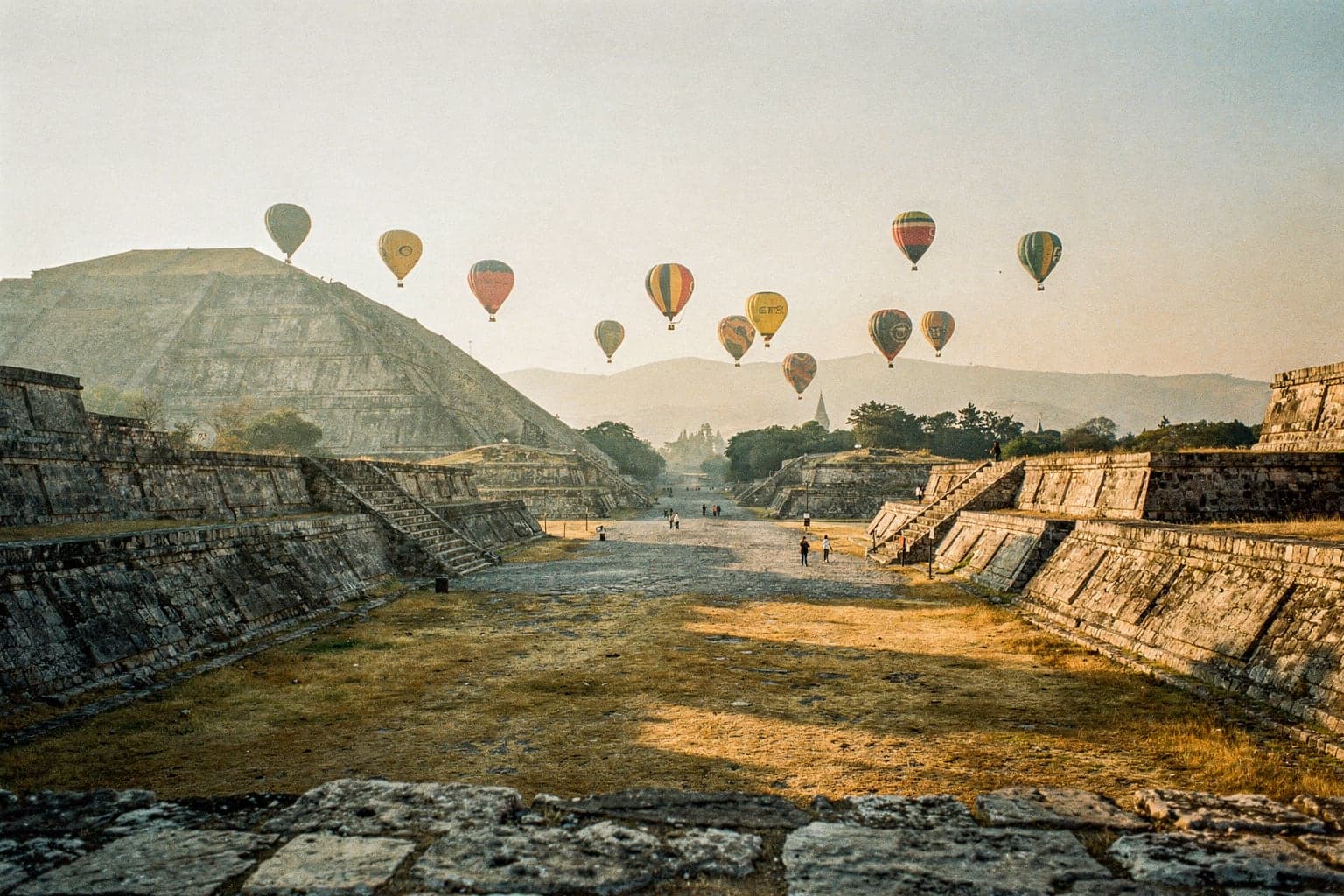
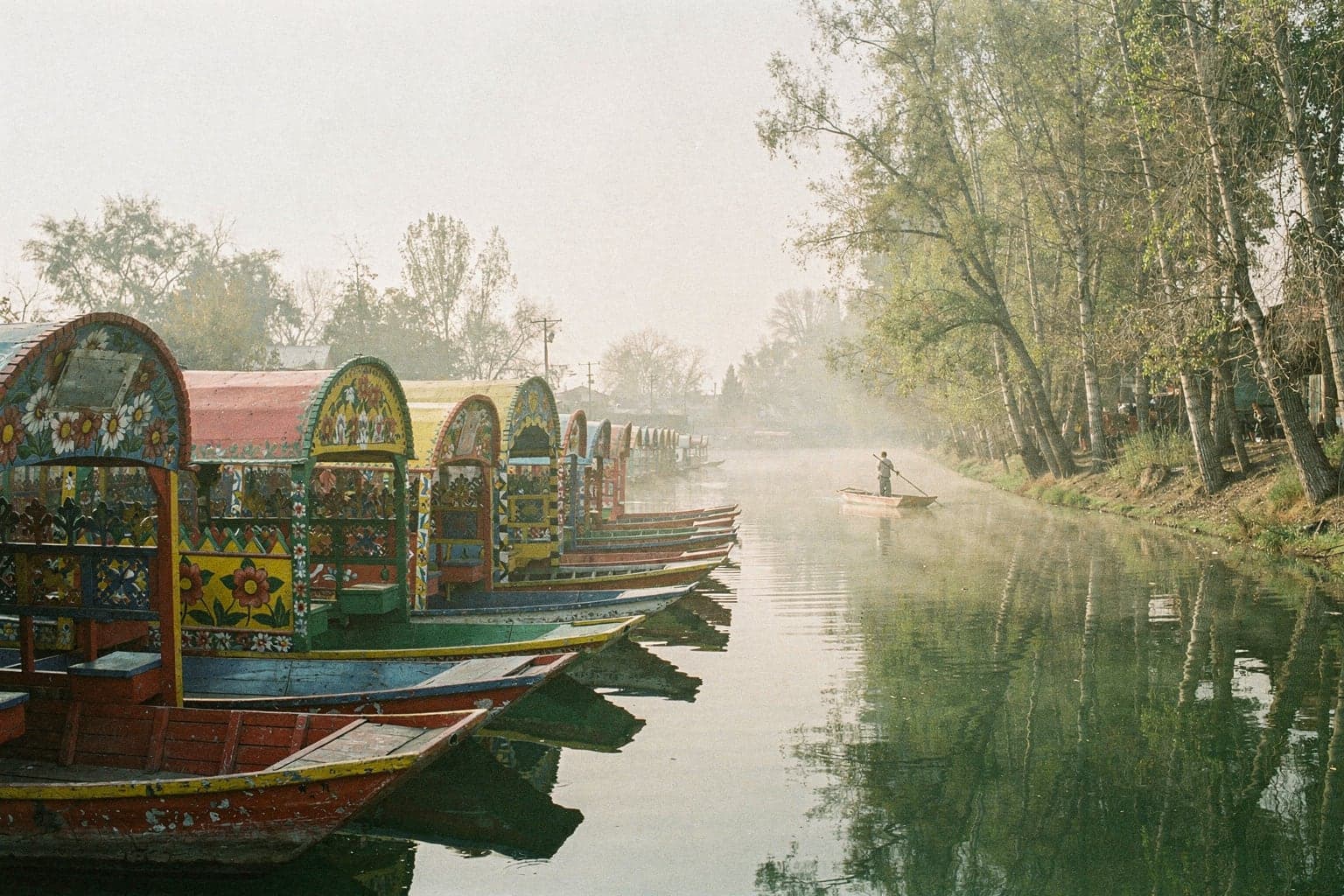
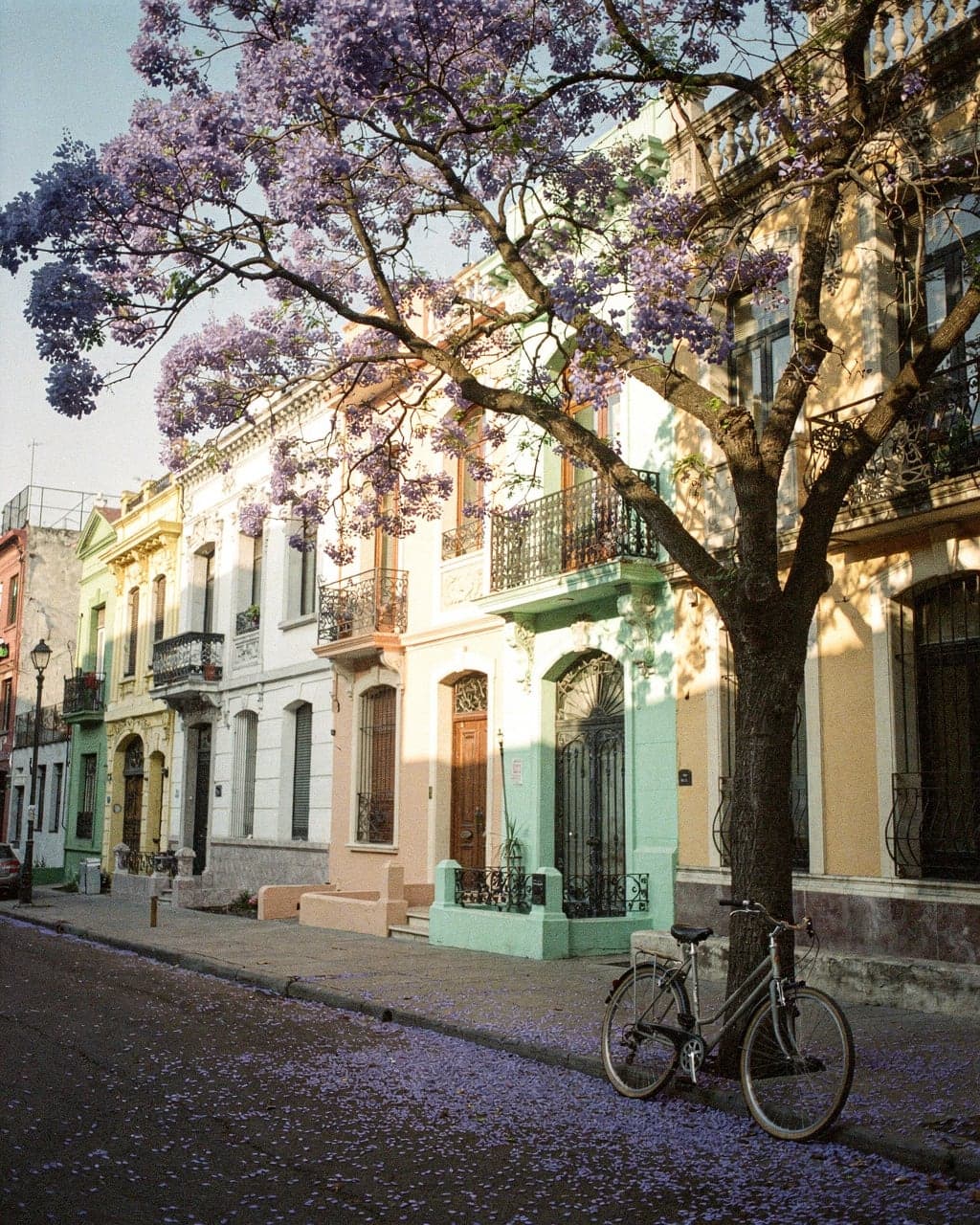
Illustration: Spike Travel (AI-assisted)
Questions people ask
Is Mexico City safe for tourists?
The main tourist areas are generally safe with sensible precautions. The US rates Mexico City Level 2 (exercise increased caution), and the main risks for visitors are petty theft, phone snatching and unlicensed taxis. Use app rides at night, keep your phone in a front pocket on the Metro and take extra care after dark outside the central neighbourhoods.
How many days do I need in Mexico City?
Four or five full days covers the Centro, Chapultepec's museums, Coyoacán, Xochimilco and a day at Teotihuacán without rushing. Add a day if you arrive tired: the altitude makes the first day slow for many visitors.
Do I need a visa to visit Mexico City?
Not for tourism if you hold a US, UK, EU/Schengen, Canadian or Australian passport. You can stay up to 180 days, but the immigration officer decides the exact number, and it can be fewer. Check the date or day count on your passport stamp or e-gate receipt.
Can you drink the tap water in Mexico City?
No. Drink bottled or filtered water; hotels usually provide it. Ice in restaurants and cafés is almost always made from purified water.
Will the altitude affect me in Mexico City?
Possibly. At 2,240 metres many people get headaches or feel short of breath for a day or two. Drink plenty of water, limit alcohol at first and save strenuous days such as Teotihuacán for later in the trip. Ask a doctor before you go if you have heart or lung conditions.
Can I take an Uber from Mexico City airport?
Yes, but not from the terminal doors, which are reserved for authorised taxis. Since March 2026, app rides have used a designated pickup zone about eight minutes' walk between Terminals 1 and 2. Follow the directions in the app, or buy an authorised taxi ticket inside arrivals.
When is the Día de Muertos parade in Mexico City in 2026?
The city's Gran Desfile de Día de Muertos runs on Saturday 31 October 2026 from Chapultepec along Paseo de la Reforma to the Zócalo. Families visit cemeteries on 1 and 2 November.
Sources
Where the facts on this page come from. Dates show when we last checked each one.
- U.S. Department of State: Mexico travel advisory and entry requirementsaccessed Oct 12, 2026
- GOV.UK: Mexico entry requirementsaccessed Oct 12, 2026
- Government of Canada: Travel advice and advisories for Mexicoaccessed Oct 12, 2026
- Smartraveller: Mexico travel adviceaccessed Oct 12, 2026
- Instituto Nacional de Migración: Países y regiones que no requieren visa para viajar a Méxicoaccessed Oct 12, 2026
- Instituto Nacional de Migración: Forma Migratoria Múltiple Digital (FMMd)accessed Oct 12, 2026
- Instituto Nacional de Migración: Tarifas de derechos migratorios 2026accessed Oct 12, 2026
- Real Estate Market & Lifestyle: Paquete Económico 2027 proposal to raise the DNR from MXN 983accessed Oct 12, 2026
- Servicio Meteorológico Nacional: Normales climatológicas 1991–2020, station 9048 Tacubaya (archived copy)accessed Oct 12, 2026
- Wikipedia: Mexico City (climate table citing SMN 1991–2020 normals; 2020 census population)accessed Oct 12, 2026
- Museo Nacional de Antropología: Información generalaccessed Oct 12, 2026
- INAH: Teotihuacan prepares for spring 2026 (fees and climbing rules)accessed Oct 12, 2026
- INAH Lugares: Museo del Templo Mayoraccessed Oct 12, 2026
- Museo Nacional de Historia, Castillo de Chapultepec: General informationaccessed Oct 12, 2026
- Museo del Palacio de Bellas Artes: Preguntas frecuentesaccessed Oct 12, 2026
- Museo Frida Kahlo: official ticket siteaccessed Oct 12, 2026
- Metro CDMX: Historia del costo del boletoaccessed Oct 12, 2026
- Metro CDMX: Tarjeta recargableaccessed Oct 12, 2026
- Metrobús CDMX: Ruta Aeropuerto T1 y T2accessed Oct 12, 2026
- Ecobici: Planes y tarifasaccessed Oct 12, 2026
- AIFA: Tren Felipe Ángelesaccessed Oct 12, 2026
- Récord: Tren al AIFA sube de precio desde el 10 de octubre de 2026accessed Oct 12, 2026
- Mexico Business News: Mexico City airport opens pickup zone for Uber, DiDi (March 2026)accessed Oct 12, 2026
- El Informador: Taxis del AICM vs taxis de aplicación (March 2026 fares)accessed Oct 12, 2026
- Récord: ¿Qué dejó el Mundial 2026 en la CDMX? (city government balance, July 2026)accessed Oct 12, 2026
- Mexico City tourism: Día de Muertos 2026 en la Ciudad de Méxicoaccessed Oct 12, 2026
- SEDEMA CDMX: Acciones para la temporada de ozonoaccessed Oct 12, 2026
- Milenio: Renta de trajineras en Xochimilco 2026accessed Oct 12, 2026
- CMLL: Cartelera de la Arena Méxicoaccessed Oct 12, 2026
- Telcel: Paquetes Amigo Sin Límiteaccessed Oct 12, 2026
- Airbnb Help Centre: Lodging tax collection in Mexico Cityaccessed Oct 12, 2026
- U.S. Embassy Mexico: Security alert on dating apps (June 2025)accessed Oct 12, 2026
- The Guardian: Backlash against Mexico City gentrification (July 2025)accessed Oct 12, 2026
- Numbeo: Cost of living in Mexico City (crowd-sourced, used as a sanity check)accessed Oct 12, 2026
If you like Mexico City
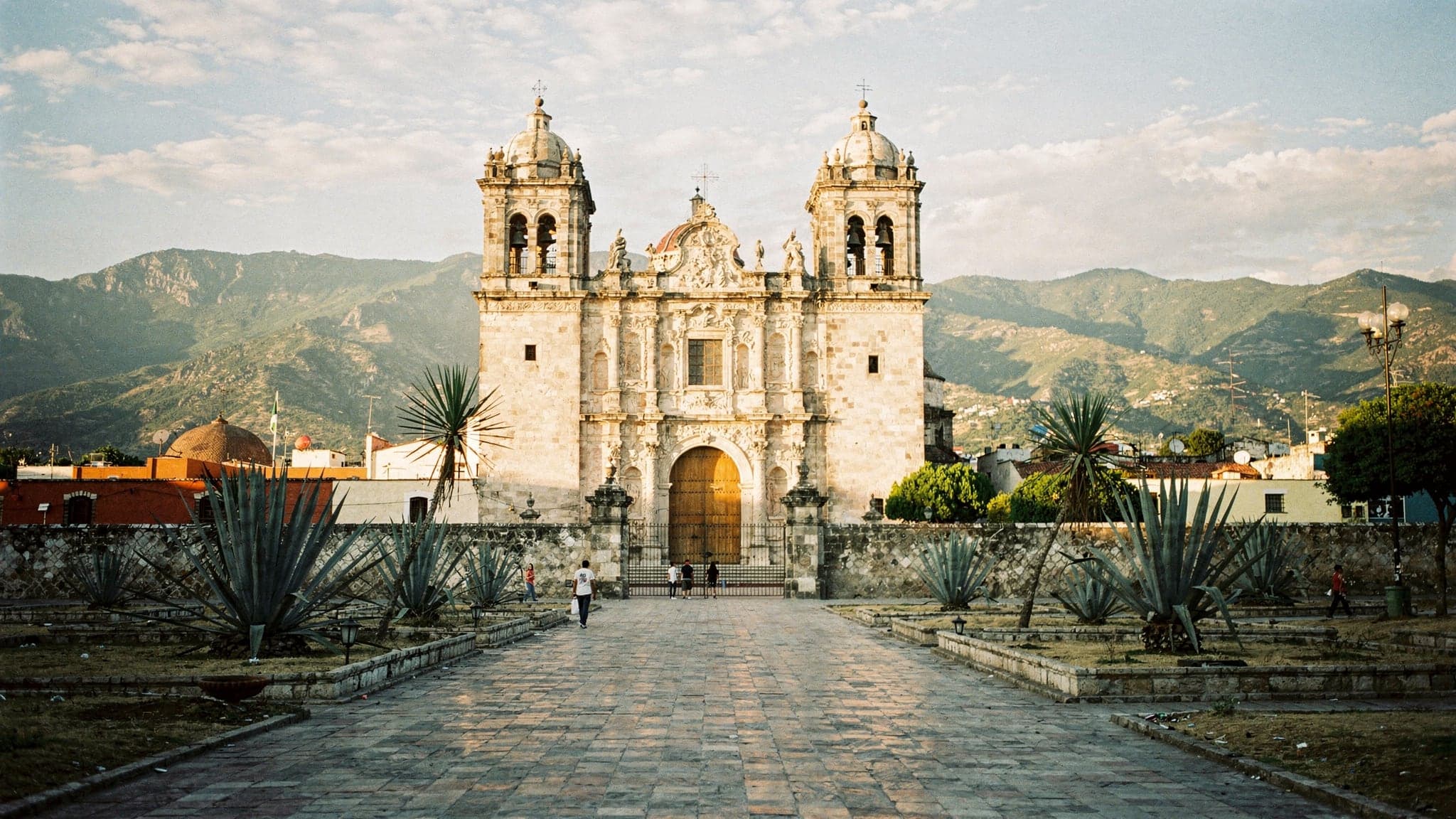
Mexico
Oaxaca
Mole, mezcal and Zapotec stone in a highland valley that still keeps its market days.
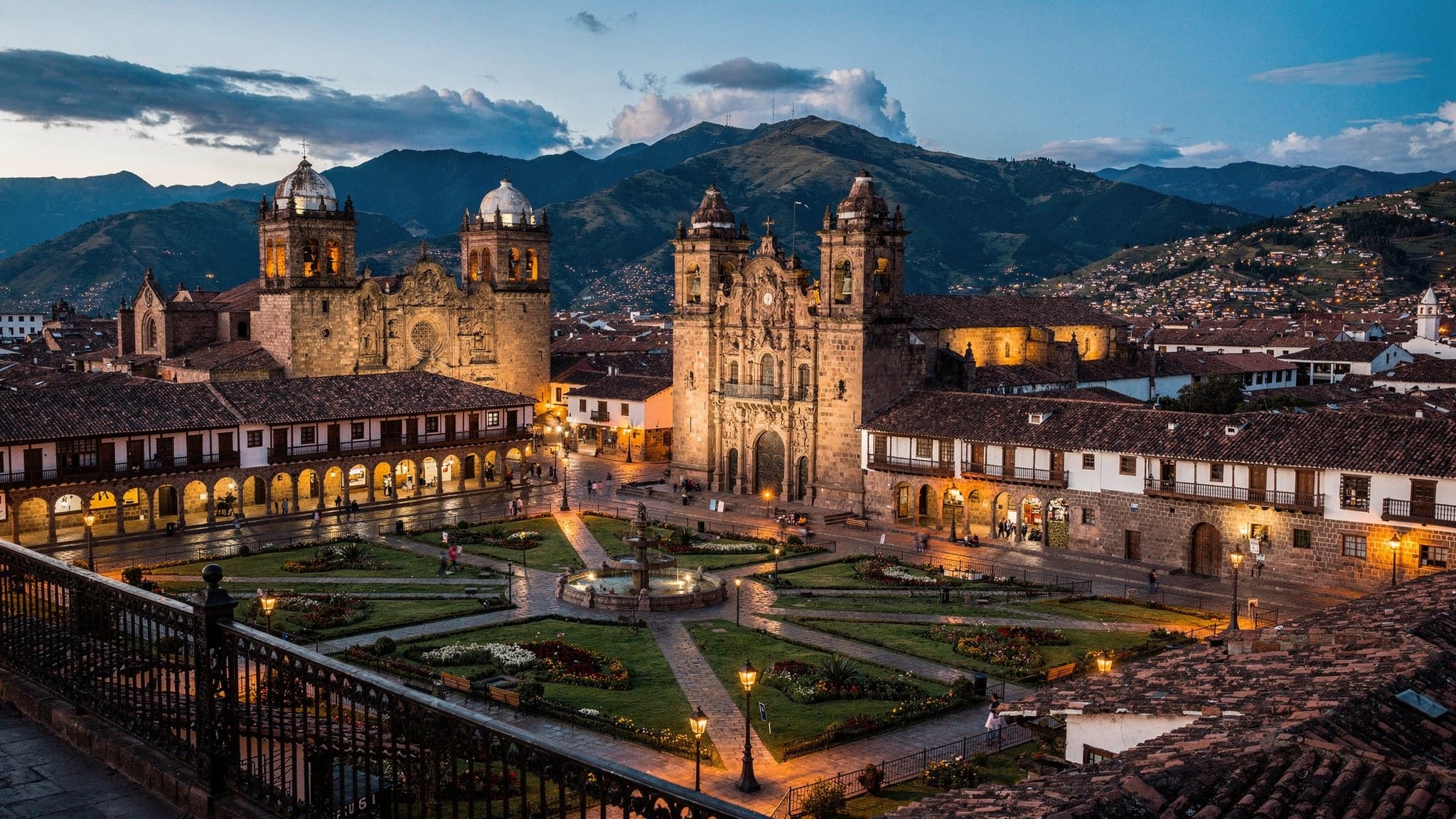
Peru
Cusco
Inca stone under Spanish balconies at 3,400 metres, with Machu Picchu a train ride down the valley.
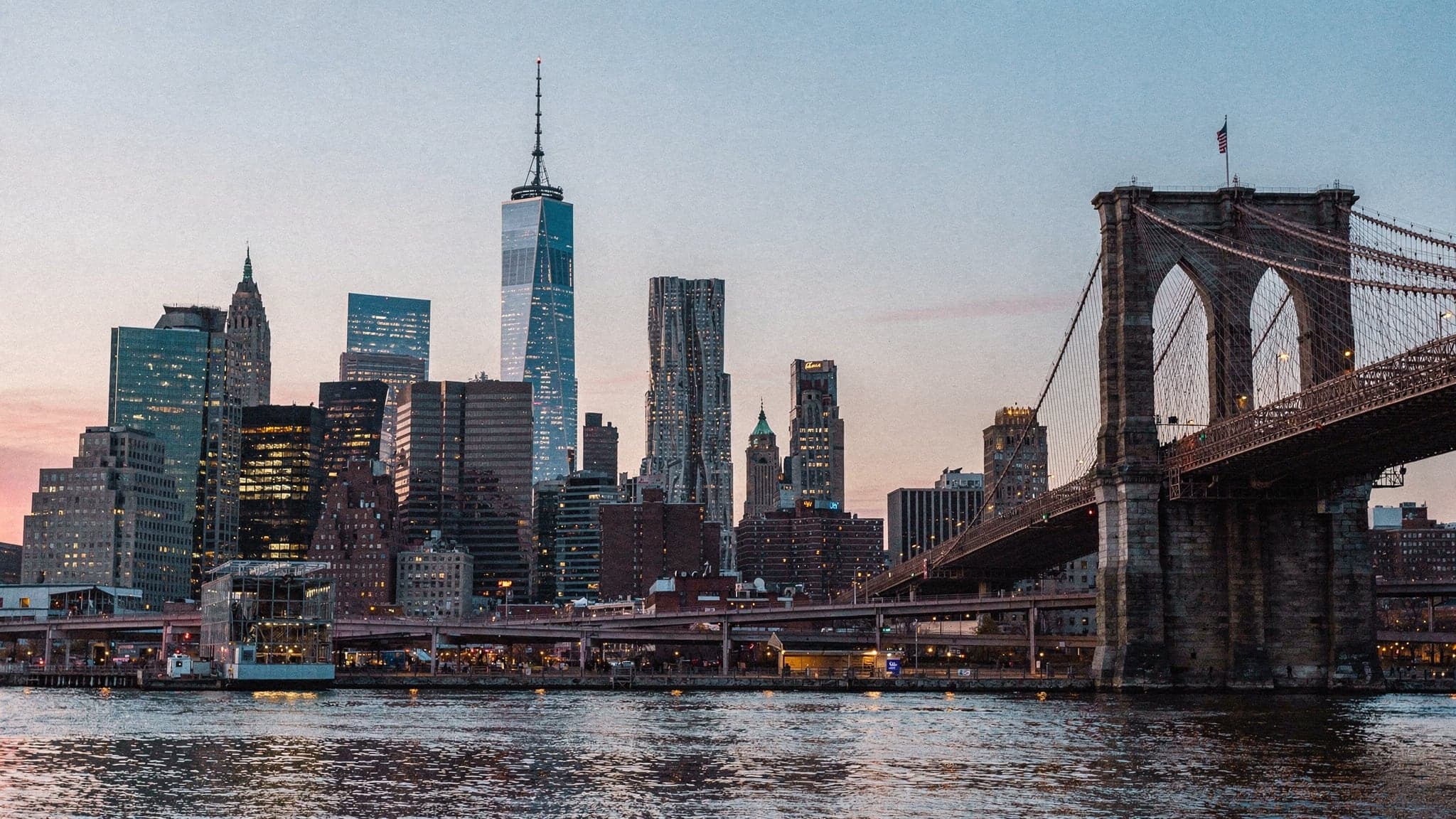
United States
New York City
Learn it on foot and underground: every block changes the mood, and the subway runs all night.
Book Mexico City
These links go to the booking sites we would use ourselves. Nothing here is currently sponsored.
Fast facts
- Currency
- Mexican peso (MXN)
- Languages
- Spanish, Nahuatl and other Indigenous languages
- Plugs
- Type A, B, 127 V, 60 Hz
- Time zone
- Mexico City (GMT-6)
- Tap water
- Drink bottled or filtered
- Tipping
- 10–15% in sit-down restaurants, ideally in cash; MXN 5–10 to supermarket baggers and MXN 10–20 to parking attendants; round up taxi fares.
- Driving
- On the right
- Emergency
- 911
- Dialing code
- +52
- Safety
- 3/5
When to go
Best: Mar, Nov.
Good for
- Culture & history5/5
- Food & drink5/5
- Nature & scenery2/5
- Adventure2/5
- Beaches1/5
- Nightlife5/5
- Romance4/5
- Family-friendly3/5
- Value for money4/5
- Big-city energy5/5
- Slow & restorative2/5
- Wildlife1/5