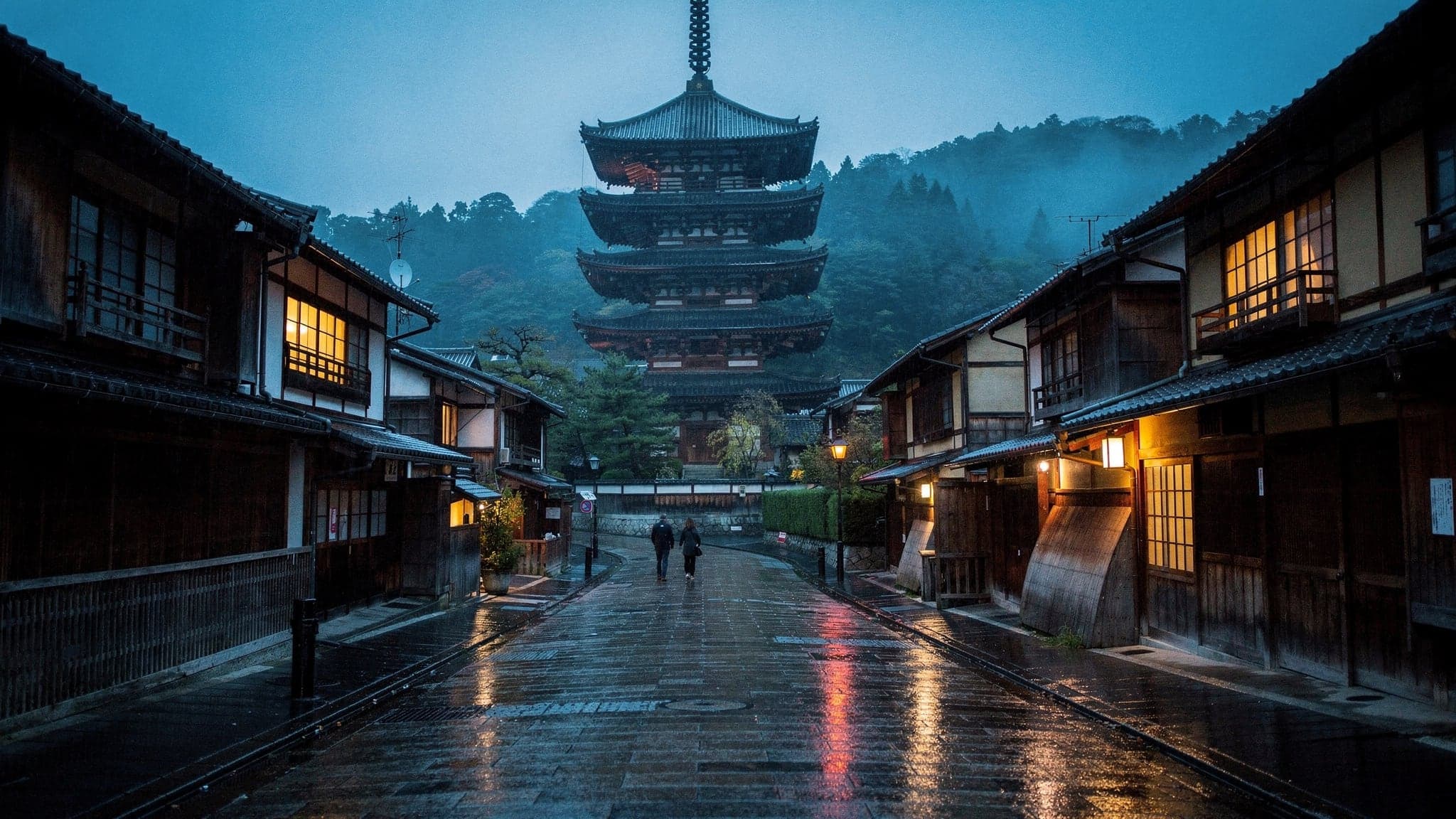
Japan, East Asia
Kyoto
A thousand years of capital kept in wood, moss and gravel, and at its best before 8am.
Illustration: Spike Travel (AI-assisted)

By Spike Travel Editorial Desk, Editorial team
Published Oct 12, 2026
Disclosure: A researched briefing compiled from official sources and reputable reporting. No press trip, hosted stay or free product was involved, and no business named here saw this copy before publication.
- Best time
- Apr, Nov
- Daily budget
- $65–700
- Safety
- 5/5
- Strongest for
- Culture & history, Food & drink, Romance
Kyoto is Japan's old capital, a grid city of temples, gardens and wooden townhouses ringed by forested hills. This briefing covers when to go (spring blossom and autumn leaves, and the crowds that come with them), real costs including the 2026 accommodation tax rise, transport from Kansai Airport, Gion's alley rules, and how to see Fushimi Inari and Arashiyama without the crush.
Why go
Kyoto was Japan's capital from 794 until 1868, and it still keeps its old life in plain sight. About 1.43 million people live here, and their daily routes run past temple gates, wooden townhouses and gardens raked into patterns that change with the season. Seventeen sites in and around the city are listed together by UNESCO as the Historic Monuments of Ancient Kyoto.
Eat tofu simmered in kelp broth at Okutan, beside Nanzen-ji, a restaurant that traces its history to 1635, or mackerel sushi pressed at Izuu in Gion since 1781. The "nightingale" floors at Nijo Castle chirp as you cross the palace corridors, and thousands of vermilion gates climb Mount Inari in the morning mist. Finish with a bowl of matcha from Ippodo, a tea merchant on Teramachi since 1717.
Kyoto's famous places are crowded, residents have lost patience with bad behaviour, and the city has started to price and police tourism: a steeper accommodation tax since March 2026, closed private alleys in Gion, and resident-priority bus fares on the way. Stay a few nights, start early and travel by train. Once the day-trippers leave, the lanes of Gion and Higashiyama empty. Prices here use ¥158 to US$1, the rate on 12 October 2026.
The lay of the land
Kyoto sits in a basin with forested hills on three sides, and the centre still follows the grid laid out for the imperial capital. The east–west avenues are numbered, so Shijō is Fourth Avenue and Gojō is Fifth, which makes places easier to find than in Tokyo. The Kamo River runs north to south along the east side of downtown.
Kyoto Station, a vast steel-and-glass building, sits in the south of the grid with the Shinkansen and Kyoto Tower. Downtown lies about 2 km north, around Shijō, Sanjō, Karasuma and Kawaramachi, with Nishiki Market and the Pontochō alley by the river.
Cross the river east and you reach Gion, then the Higashiyama hills: Yasaka Shrine, Kiyomizu-dera and the stone lanes between them, with Nanzen-ji, the Philosopher's Path and Ginkaku-ji further north. Kinkaku-ji and Ryoan-ji are in the north-west. Arashiyama is on the western edge, Fushimi Inari to the south-east, and Uji and Nara further south.
The big sights sit at opposite corners of the city, so group them by area and give each area a morning.
Areas at a glance
Kyoto Station area$$$$
The modern hub, with the Shinkansen, department stores and Kyoto Tower
Best for: Short stays, day trips and late arrivals
Downtown (Shijo, Sanjo and Karasuma)$$$$
Covered arcades, Nishiki Market and Pontocho's lantern-lit alley by the river
Best for: First-timers who want food and transport on the doorstep
Gion and Higashiyama$$$$
Wooden teahouses, stone lanes and temples stepping up the hillside
Best for: Atmosphere after the day-trippers leave
Northern Higashiyama and Okazaki$$$$
Canals, Nanzen-ji, the Philosopher's Path and the city's big museums
Best for: Slow travellers and repeat visitors
Arashiyama and Sagano$$$$
River, bamboo and hills on the western edge; very quiet at night
Best for: Ryokan stays and dawn walks in the bamboo grove
When to go
Kyoto's two great seasons are also its most crowded. Cherry blossoms reach full bloom around 4 April on the Japan Meteorological Agency's 1991–2020 average, and autumn leaves usually peak from mid-November into early December. In both windows rooms sell out and rates rise, so book as early as you can.
October and May are the smart compromise. October averages a high of 23.4°C and May 25.1°C, with fresh green maples and fewer coaches.
Summer is hard going. The rainy season runs through June and into July, July is the wettest month at 224 mm, and August averages a high of 33.7°C, the hottest month on the record. Winter is cold, with January and February lows around 1.5°C, but the temples are at their quietest, and the rare snow day at Kinkaku-ji is worth the chill.
The Aoi Matsuri procession is on 15 May. The Gion Matsuri fills July, with its great float processions on 17 and 24 July. On 16 August, the Gozan no Okuribi fires light the hills to see off ancestral spirits. The Jidai Matsuri costume parade is on 22 October. Golden Week (29 April to 5 May), Obon in mid-August and New Year are domestic holiday peaks.
The Kyoto City Tourism Association publishes a congestion forecast by area, based on big data. Check it the night before and swap your mornings around.
Kyoto month by month
Best: Apr, Nov. Bars show our 1–5 rating; numbers are average daily highs in °C. The outlined bar is this month.
Month-by-month table
| Month | Rating | High / low °C | Rain mm | Note |
|---|---|---|---|---|
| January | 3/5 | 9 / 2 | 53 | Cold and quiet; New Year shrine visits pack the big shrines for the first three days. |
| February | 3/5 | 10 / 2 | 65 | The coldest nights and thinnest crowds; Setsubun rites at shrines in early February. |
| March | 4/5 | 14 / 4 | 106 | Plum blossom gives way to the first cherry blossom late in the month; rates climb fast. |
| April | 5/5 | 20 / 9 | 117 | Full bloom around 4 April on the JMA average, with the heaviest crowds of the year. |
| May | 4/5 | 25 / 15 | 151 | Golden Week crowds to 5 May; Aoi Matsuri procession on 15 May; fresh green maples. |
| June | 2/5 | 28 / 19 | 200 | Rainy season. Moss gardens are at their greenest and tour groups thin out. |
| July | 2/5 | 32 / 24 | 224 | Gion Matsuri all month, with float processions on 17 and 24 July; the wettest month. |
| August | 1/5 | 34 / 25 | 154 | The hottest month; Gozan no Okuribi fires light the hills on 16 August. |
| September | 2/5 | 29 / 21 | 179 | Heat lingers and typhoons can disrupt trains; temples are calmer. |
| October | 4/5 | 23 / 14 | 143 | Pleasant days around 23°C; Jidai Matsuri costume parade on 22 October. |
| November | 5/5 | 17 / 8 | 74 | Autumn leaves usually peak from mid-November into early December; book rooms early. |
| December | 3/5 | 12 / 4 | 57 | Leaves linger into early December, then cold, quiet weeks before New Year closures. |
Early April and mid-November to early December are Kyoto at its most beautiful and most crowded, so book rooms as early as you can. October and May are the smart compromise, with highs of 23–25°C and thinner crowds. Avoid July and August if heat bothers you: August averages 33.7°C.
What it costs
Kyoto costs a little less than Tokyo for food and about the same for rooms in peak season. Shoestring travellers can manage on about US$65 a day with a hostel dorm (typically ¥3,000–5,000), noodle lunches and a day pass. Mid-range is about US$170, mostly the room: a plain 3-star double typically runs ¥10,000–20,000, more in blossom and leaf season. Luxury starts around US$700 a day for a ryokan or five-star hotel with kaiseki dinners.
Numbeo's crowd-sourced figures put an inexpensive meal at about ¥1,500, a pint of draft beer at ¥500 and a cappuccino at ¥520. Temples are the bargain. Kinkaku-ji and Kiyomizu-dera cost ¥500 each, Ryoan-ji ¥600 and Nijo Castle ¥1,300 with its palace. Ginkaku-ji doubled its fee to ¥1,000 in April 2026. Fushimi Inari and the Arashiyama bamboo grove are free.
Getting around is cheap for now: a city bus ride is ¥230 and the Subway and Bus 1-Day Pass is ¥1,100. Kyoto plans to charge non-residents about ¥350–400 per bus ride, with residents paying ¥200, during the fiscal year from April 2027, subject to national approval.
Japan-wide changes apply here too. The departure tax rose to ¥3,000 on 1 July 2026. From 1 November 2026, tax-free shopping works by refund: you pay tax at the till and claim it back after customs checks your goods at the airport, within 90 days of purchase and before you check your bags. Tipping is not done.
Loading tool…
What a day costs
Shoestring
$65
per person, per day, no flights
Mid-range
$170
per person, per day, no flights
Luxury
$700
per person, per day, no flights
Shoestring buys a hostel dorm (typically ¥3,000–5,000), noodle lunches, a ¥1,100 day pass and free sights such as Fushimi Inari. Mid-range covers half of a ¥10,000–20,000 3-star double, sit-down dinners and three or four temple fees. Luxury means a ryokan or five-star hotel with kaiseki dinners, taxis and guides, plus accommodation tax of up to ¥10,000 per person per night. Converted at ¥158 to US$1 (12 October 2026).
| Item | Local price | ≈ USD | Note |
|---|---|---|---|
| Cappuccino at a café | ¥520 | $3.3 | Numbeo crowd-sourced average, October 2026 |
| Draft beer (pint) | ¥500 | $3.2 | Numbeo average; reported range ¥400–700 |
| Noodles or set lunch | ¥1,500 | $9.5 | Numbeo average for an inexpensive restaurant meal |
| Mid-range dinner for two | ¥5,000 | $32 | Three courses without drinks (Numbeo); kaiseki costs far more |
| City bus ride | ¥230 | $1.46 | Flat fare in the central zone; non-resident fares are set to rise from fiscal 2027 |
| Subway and Bus 1-Day Pass | ¥1,100 | $7 | Pays off from the fifth bus ride; also covers the weekend EX100 and EX101 express buses |
| HARUKA from Kansai Airport | ¥2,200 | $14 | JR West's one-way visitor ticket to Kyoto; about 75 minutes |
| Fixed-fare taxi from Kansai Airport | From ¥23,800 | $151 | To Kyoto Station's Hachijo exit; the train is a fraction of the price |
| Hostel dorm bed | ¥3,000–5,000 | $25 | Typical range; peaks in cherry-blossom and autumn-leaf season |
| 3-star double room | ¥10,000–20,000 | $95 | Typical range, before accommodation tax |
| Kinkaku-ji admission | ¥500 | $3.2 | Adults; open 9:00–17:00 every day |
| Accommodation tax | ¥200–10,000 | $1.3 | Per person per night from 1 March 2026, by room rate; USD shown for the lowest tier |
| Travel eSIM | From US$4 | $4 | Airalo Japan packs; unlimited data about US$26.50 for seven days (October 2026) |
| Shinkansen to Tokyo | ¥14,170 | $90 | Nozomi reserved seat, regular season, one way |
Prices verified Oct 12, 2026. Exchange rates move; treat USD as a guide.
Build a budget for KyotoGetting there and around
Kyoto has no airport. Most international flights land at Kansai International (KIX), on an island in Osaka Bay. The JR HARUKA limited express runs to Kyoto Station in about 75 minutes, and JR West's HARUKA One-way Ticket for visitors costs ¥2,200. The airport limousine bus costs ¥2,800 and depends on traffic, and a fixed-fare taxi to Kyoto Station's Hachijō exit starts at ¥23,800. Domestic flights also use Osaka's Itami Airport (ITM), where a limousine bus reaches Kyoto Station in about 50 to 55 minutes for ¥1,500.
From Tokyo, the Nozomi Shinkansen takes about two hours and fifteen minutes and costs ¥14,170 one way in regular season. A 7-day Japan Rail Pass now costs ¥50,000, so it rarely pays for a simple Tokyo and Kyoto trip. Bags with combined dimensions of 161–250 cm need a reserved seat with an oversized baggage area, which costs nothing extra; board without one and you pay ¥1,000.
Inside the city, use trains wherever you can. The JR Nara Line reaches Inari, for Fushimi Inari, in under ten minutes from Kyoto Station. The JR Sagano Line, Hankyu and the Randen tram all serve Arashiyama, so spread out instead of following the crowd onto one line. Keihan runs along the river through Gion-Shijō, and the Tozai subway line covers Nijo Castle and Higashiyama.
City buses reach the places trains do not, but they are slow and often packed. On weekends and holidays, the EX100 and EX101 sightseeing express buses run from Kyoto Station to Kiyomizu-dera in 12 minutes, Gion in 17 and Ginkaku-ji in 30, stopping only near the main sights. They cost ¥500 a ride, or nothing extra with the day pass.
Suica, PASMO and ICOCA work on the subway, buses and trains. Credit-card tap-to-ride works on several Kansai private railways but not yet on Kyoto's city buses, which plan new payment options, including credit cards, for the next fiscal year. Taxis are plentiful and fair value for three or four people. Cycling suits the flat centre, but use paid bike parks, because bikes left on the street get removed.
Arriving and moving around
- KIXKansai International Airport (Osaka). To the centre: JR HARUKA to Kyoto Station in about 75 minutes (¥2,200 visitor one-way ticket); limousine bus ¥2,800; fixed-fare taxi from ¥23,800
- ITMOsaka International Airport (Itami), domestic flights. To the centre: Limousine bus to Kyoto Station in about 50 to 55 minutes (¥1,500)
Kyoto's city buses reach almost everything but are slow and often full; the flat fare in the central zone is ¥230, and the city plans to charge non-residents about ¥350–400 during the fiscal year from April 2027. Use trains where you can: two subway lines, JR (the Nara Line to Inari, the Sagano Line to Arashiyama), Keihan along the Kamo River and Hankyu downtown. The ¥1,100 Subway and Bus 1-Day Pass also covers the weekend EX100 and EX101 sightseeing express buses from Kyoto Station to Kiyomizu-dera, Gion and Ginkaku-ji. Suica, PASMO and ICOCA all work; credit-card tap is not yet available on city buses. Taxis are plentiful and fair value for three or four people. Cycling suits the flat centre, but park only in paid bike lots.
Where to stay
Downtown, between Karasuma and the Kamo River, is the best all-round base for first-timers, with food, shopping, the subway and private railways a few minutes' walk away. Piece Hostel Sanjo is a well-run budget option there, and The Ritz-Carlton, Kyoto, opened in 2014, has the river view at the top end.
Stay by Kyoto Station if you have early trains, day trips or only a night or two. It is less atmospheric, but everything leaves from here. K's House Kyoto and hotel kanra kyoto are both a short walk away, and Hotel Granvia Kyoto is built into the station itself.
For atmosphere, stay in Higashiyama or Gion, where the lanes empty after the day-trippers leave. Ryokan Motonago occupies a wooden townhouse built in 1905 on Nene-no-michi, the lane below Kōdai-ji.
Arashiyama suits a ryokan night and a dawn walk in the bamboo grove, but it is a long way from everything else in the evening.
Do not choose a room on price alone if it is far from a station. In Kyoto, a cheap hotel that puts you on a crowded bus twice a day costs you hours. The accommodation tax is assessed per person: four people sharing a ¥100,000 room each pay ¥1,000, not ¥10,000.
Places we'd book
- Check rates
Piece Hostel SanjoBudgetDowntown, near Sanjo
A design-led hostel with dorms and private rooms, a lounge and a terrace, close to the arcades and the river.
- Check rates
K's House KyotoBudgetKyoto Station area
A long-running backpacker hostel about ten minutes' walk from Kyoto Station, with two kitchens and a rooftop terrace.
- Check rates
hotel kanra kyotoMid-rangeKyoto Station area
Spacious rooms mixing traditional and modern design, about 12 minutes' walk from Kyoto Station.
- Check rates
Ryokan MotonagoSomething differentHigashiyama (Nene-no-michi)
A small ryokan in a wooden townhouse built in 1905, on the lane below Kodai-ji, with 11 tatami guest rooms.
- Check rates
Hotel Granvia KyotoLuxuryInside Kyoto Station
The convenience pick, built into the station building, with a pool and many restaurants.
- Check rates
The Ritz-Carlton, KyotoLuxuryKamo River, Nijo-Ohashi
Opened in 2014 on the west bank of the Kamo River, with some of the city's largest guest rooms.
What to do
Begin with Fushimi Inari before 8am. Entry is free and the paths never close. The famous tunnels of gates start just behind the main shrine, and the full loop over Mount Inari takes two to three hours. Most visitors turn back long before the Yotsutsuji intersection, so keep climbing and the crowd falls away.
Kiyomizu-dera (¥500) opens at 6:00, early enough to see its wooden stage over the trees and walk down the Sannenzaka and Ninenzaka lanes before the shops open. From there, Yasaka Shrine and Gion are a short walk north. In Gion, Hanamikoji Street and the canal-side Shirakawa area are open to all.
Spend another morning in the north-west at Kinkaku-ji (¥500, 9:00–17:00), whose gold-leafed pavilion looks best at opening time, and the raked-gravel rock garden of Ryoan-ji (¥600). Nijo Castle (¥1,300 with the Ninomaru Palace) fits on the way back downtown.
Northern Higashiyama is the gentlest day: Nanzen-ji, the canal-side Philosopher's Path and Ginkaku-ji (¥1,000), with the big museums of Okazaki for a rainy afternoon.
Arashiyama needs an early start. Walk the bamboo grove before 8am, then visit Tenryu-ji's garden (¥500) and the hillside villa of Okochi Sanso (¥1,000, including matcha and a sweet).
For day trips, Nara is 35 to 45 minutes away, with deer in the park and Todai-ji's Great Buddha Hall (¥800). Uji, about 30 minutes south, has Byodo-in (¥700), the temple on the ¥10 coin, and the tea that made the region famous. Himeji Castle, under an hour away by Shinkansen, has charged non-residents ¥2,500 since 1 March 2026.
The shortlist
Fushimi Inari TaishaSee
Thousands of vermilion torii gates climbing Mount Inari behind the head shrine of the Inari network. The full loop to the summit and back takes two to three hours.
Free and always open. Arrive before 8am or after 4pm; crowds thin above the Yotsutsuji intersection.
Book ticketsKiyomizu-dera and the Higashiyama lanesSee
The hillside temple with a wooden stage jutting over the trees, reached by the stepped lanes of Sannenzaka and Ninenzaka.
¥500; opens at 6:00. Walk the lanes before the shops open around 9am.
Book ticketsKinkaku-ji and Ryoan-jiSee
The gold-leafed Golden Pavilion reflected in its pond, and a short bus ride away the raked-gravel rock garden of Ryoan-ji. Together they make a north-west morning.
Kinkaku-ji ¥500, 9:00–17:00 daily; Ryoan-ji ¥600. Arrive at opening.
ArashiyamaSee
The bamboo grove, Tenryu-ji's garden, Togetsukyo Bridge and the hillside villa of Okochi Sanso, all within walking distance of each other on the city's western edge.
Bamboo grove free, best before 8am; Tenryu-ji garden ¥500; Okochi Sanso ¥1,000 including matcha and a sweet.
Book ticketsNijo CastleSee
The shoguns' Kyoto residence, with painted screens and the "nightingale" floors of the Ninomaru Palace, which chirp underfoot.
¥1,300 including the Ninomaru Palace; close to Nijojo-mae station on the Tozai line.
Ginkaku-ji and the Philosopher's PathSee
A canal-side walk of about 2 km between Nanzen-ji and the Silver Pavilion, lined with cherry trees and small temples.
Ginkaku-ji ¥1,000 since April 2026, up from ¥500. The path itself is free.
Gion at duskExperience
Hanamikoji Street and the canal-side Shirakawa area as the lanterns come on. Private side alleys in the Gion Minamigawa area are closed to visitors.
Free. Stay on public streets, and never follow or photograph maiko and geiko at close range.
Nishiki MarketEat
A narrow covered street of food stalls downtown: pickles, tofu, grilled seafood, sweets and knives.
Most shops open about 9:00 or 10:00 to 18:00; many close Wednesdays or Sundays. Eat at the stall, not while walking.
Tea ceremonyExperience
A guided introduction to the etiquette of matcha in a tea room, usually with a seasonal sweet.
Book ahead; small-group sessions typically last 45 to 60 minutes.
Book ticketsNaraDay trip
The earlier capital, with deer roaming the park and Todai-ji's colossal bronze Buddha in one of the largest wooden buildings in the world.
About 35 to 45 minutes from Kyoto by Kintetsu or JR. Todai-ji's Great Buddha Hall ¥800.
Book ticketsUjiDay trip
Byodo-in's Phoenix Hall, the temple on the ¥10 coin, and the riverside town whose tea fields made Kyoto's matcha famous.
About 30 minutes by JR or Keihan. Byodo-in ¥700 for the garden and museum; the Phoenix Hall interior costs extra.
Book ticketsHimeji CastleDay trip
Japan's finest surviving original castle, white-walled on its hill, with a steep climb through the wooden keep.
¥2,500 for non-residents aged 18 and over since 1 March 2026. Under an hour by Shinkansen.
Eat and drink
Kyoto cooking runs on tofu and yuba, pickles, river fish and kaiseki menus built around what is in season. The city's old shops are often its best restaurants.
Start with yudofu, tofu simmered in kelp broth, at Okutan beside Nanzen-ji. Try saba-zushi, pressed mackerel sushi, at Izuu in Gion, and nishin soba, buckwheat noodles with sweet simmered herring, at Matsuba next to the Minamiza theatre, serving since 1861. Near Kyoto Station, Honke Daiichi-Asahi has served Kyoto-style pork and soy ramen since 1947. For dessert, order kuzukiri, chilled arrowroot noodles with black sugar syrup, at Kagizen Yoshifusa's Shijō shop. Ippodo on Teramachi sells tea, Inoda Coffee has poured since 1940, and Omen near Ginkaku-ji serves udon with sesame and vegetables.
Nishiki Market, a narrow covered street of food stalls downtown, is best before lunch. Most shops open around 9:00 or 10:00 and close by 18:00, many close on Wednesdays or Sundays, and you are expected to eat at the stall, not while walking.
In the evening, Pontochō's lantern-lit alley and the restaurants along Kiyamachi are the liveliest strip. From May to September, many riverside restaurants build wooden terraces over the Kamo River for dining. Some of Gion's most exclusive restaurants still turn away first-time guests without an introduction, so ask your hotel to book.
Order this
Yudofu
Silken tofu simmered in kelp broth, served with dipping sauce, a dish tied to the temples of northern Higashiyama.
Try it at: Okutan, beside Nanzen-ji (history traced to 1635)
Saba-zushi
Mackerel cured and pressed onto rice, the festival sushi of Kyoto.
Try it at: Izuu, Gion (since 1781)
Nishin soba
Hot buckwheat noodles topped with sweet simmered herring.
Try it at: Matsuba, beside the Minamiza theatre (since 1861)
Kyoto ramen
Rich pork and soy broth with thin noodles, piled with green onion.
Try it at: Honke Daiichi-Asahi, five minutes' walk from Kyoto Station (since 1947)
Kuzukiri
Chilled arrowroot noodles dipped in black sugar syrup, a summer dessert.
Try it at: Kagizen Yoshifusa, Shijo main shop in Gion
Matcha and sencha
Kyoto's tea, from ceremonial matcha to everyday sencha, best tasted at a long-established merchant.
Try it at: Ippodo Tea, Teramachi (since 1717)
Udon with sesame
Thick wheat noodles with a sesame-laced dipping broth and seasonal vegetables.
Try it at: Omen, near Ginkaku-ji
Kissaten coffee
Kyoto's classic café breakfast and coffee culture.
Try it at: Inoda Coffee, Sakaimachi main shop (since 1940)
Practicalities
Money. Cards are accepted in hotels, department stores and most restaurants, but carry cash: some temple ticket windows, shrine offices and small eateries take cash only. 7-Eleven and Japan Post ATMs accept most foreign cards.
Data. Airalo's Japan eSIM packs start at about US$4, and unlimited data costs about US$26.50 for seven days (October 2026).
Water and power. Tap water is safe. Sockets are Type A and B at 100 V, and Kyoto runs at 60 Hz, unlike Tokyo's 50 Hz.
Entry. See the visa table above. JESTA became law in May 2026 but is not running yet; its start date will be set by cabinet order, no later than 31 March 2029. There is no official JESTA portal, so ignore anyone selling "early registration". Visit Japan Web is free and optional.
Medicines. Stimulant ADHD medicines such as Adderall are banned in Japan, and more than a month's supply of some prescription drugs needs an import certificate. Check the health ministry's guidance before you pack.
Safety. Kyoto is calm and safe to walk at night. Watch for cyclists on pavements and for narrow lanes without footpaths. Install JNTO's Safety tips app for English earthquake and weather alerts, and save the Japan Visitor Hotline (050-3816-2787, 24 hours). Police are 110; fire and ambulance are 119.
Etiquette. Take your shoes off where you see a raised step or a rack of slippers. Many temple interiors ban photography, so look for the signs. Keep your voice down on residential lanes.
LGBTQ+. Kyoto is quieter than Tokyo, with a small bar scene. Japan does not recognise same-sex marriage, though Kyoto City has run a partnership oath system since September 2020.
Accessibility. Temples mean steps, gravel and high thresholds, and the lanes up to Kiyomizu-dera are steep. Fushimi Inari's main shrine is manageable, but the mountain paths are long flights of stairs.
Phrases. Sumimasen (excuse me). Arigatō gozaimasu (thank you); in Kyoto you will also hear "ōkini". Kore kudasai (this one, please). Okaikei onegaishimasu (the bill, please).
Entry rules by passport
| Passport | Rule | Max stay | Notes | Checked |
|---|---|---|---|---|
| United States | Visa-free | 90 days | No visa needed for tourism stays of up to 90 days; your passport must be valid for the whole stay. Officers photograph and fingerprint visitors on arrival. JESTA, Japan's planned pre-travel authorisation, became law in May 2026 but is not running: its start date will be set by cabinet order, no later than 31 March 2029. Visit Japan Web is free and optional. | Oct 12, 2026 |
| United Kingdom | Visa-free (permission granted on arrival) | 90 days, extendable once for a further 90 days | GOV.UK describes this as a visa on arrival for tourism or business of up to 90 days; you can apply at a regional immigration office for another 90 days. Your passport must be valid for the length of your stay, with one blank page for the landing stamp. JESTA is not yet in force. | Oct 12, 2026 |
| EU/Schengen | Visa-free | 90 days | Every EU member state is on Japan's visa-exemption list for short stays of up to 90 days. Austrian, German and Irish citizens may apply in Japan to extend their stay to a maximum of six months. Your passport must be valid for the whole stay. JESTA is not yet in force. | Oct 12, 2026 |
| Canada | Visa-free | 90 days | Tourist visa not required for stays of up to 90 days. Overstaying the 90-day limit is a criminal offence in Japan. Your passport must be valid for the expected duration of your stay; airlines may apply stricter rules. JESTA is not yet in force. | Oct 12, 2026 |
| Australia | Visa-free | 90 days | Smartraveller says Australians currently do not need a visa for visits of up to 90 days, and that entry and exit conditions can change at short notice. JESTA is not yet in force. | Oct 12, 2026 |
Entry rules change without notice. Confirm with the official source linked in the Checked column before you travel.
Safety: 5/5
Kyoto is calm and safe to walk at night, and crime against visitors is rare. The everyday hazards are crowding on narrow lanes and packed buses, cyclists on pavements, and summer heat: August averages a high of 33.7°C. From late summer, typhoons can halt trains, and earthquakes are possible anywhere in Japan, so install JNTO's Safety tips app for English alerts and save the 24-hour Japan Visitor Hotline (050-3816-2787). Canada's advice to take normal security precautions applies here.
- Websites selling "early registration" for JESTA. No official JESTA portal exists yet.
- Copycat Visit Japan Web apps. The Digital Agency has warned about lookalikes; use vjw.digital.go.jp only.
- Paying for "entry" to Fushimi Inari or the Arashiyama bamboo grove. Both are free to walk; paid tours sell guiding, not access.
Fast facts
- Currency
- Japanese yen (JPY)
- Languages
- Japanese
- Plugs
- Type A, B, 100 V, 60 Hz (Tokyo and eastern Japan run at 50 Hz)
- Time zone
- Tokyo (GMT+9)
- Tap water
- Safe to drink
- Tipping
- Not done anywhere. Service is included, and money left on the table may be handed back to you.
- Driving
- On the left
- Emergency
- 110 police; 119 fire and ambulance; Japan Visitor Hotline 050-3816-2787 (24 hours, English)
- Dialing code
- +81
- Safety
- 5/5
What nobody tells you
The bamboo grove is small. The famous path takes only a few minutes to walk, and by mid-morning it is a slow queue of phones held high. Go at first light or skip it.
Fushimi Inari's lower gates are the same story. Between mid-morning and late afternoon, the first stretch of tunnels is shoulder to shoulder. Climb further, or come at dawn or after dark.
The buses can wreck a day. Routes to Kiyomizu-dera and Ginkaku-ji fill at Kyoto Station, and suitcases make it worse. Use trains, the weekend express buses or a taxi split four ways.
Temples close early. Many shut their gates around 16:30 to 17:00, so plan gardens for the morning and leave evenings for the river.
Summer is brutal. In July and August, highs average 32–34°C with heavy humidity, and the basin traps the heat. Plan indoor afternoons.
Kyoto goes to bed early. Outside Pontochō and Kiyamachi, most streets are quiet by 10pm. Treat that as a feature.
The rules keep tightening. Gion's alley closures, the higher accommodation tax and the planned two-tier bus fares all arrived within about three years. Check the latest before you go, and expect more signs asking you to behave.
Insider tips
- Start at 7am. Fushimi Inari, the bamboo grove and Kiyomizu's lanes are different places before the tour groups arrive.
- Check the Kyoto Travel congestion forecast the night before and swap your morning plan if an area is forecast to be busy.
- Take trains wherever you can. JR to Inari and Arashiyama, Keihan to Gion-Shijo and Fushimi-Inari, the Tozai subway to Nijo Castle.
- On weekends and holidays, the EX100 and EX101 express buses reach Kiyomizu-dera from Kyoto Station in 12 minutes for ¥500, or free with the day pass.
- Forward your suitcase between hotels instead of taking it onto a city bus.
- Carry cash. Some temple ticket windows, shrine offices and small restaurants do not take cards.
- Many temples close around 16:30 to 17:00. Do gardens in the morning and save evenings for the river and Pontocho.
- Accommodation tax is assessed per person. Four people sharing a ¥100,000 room each pay ¥1,000, not ¥10,000.
Skip it
- Entering Gion's private alleys or following maiko for photos. The local council closed the alleys in 2024, and it is plain rude.
- Taking the city bus to Kiyomizu-dera at mid-morning with luggage. Use the EX100 express, a taxi or your feet.
- Trying to do Fushimi Inari, Kinkaku-ji and Arashiyama in one day. They sit at three corners of the city.
- The Arashiyama bamboo grove at midday. The path is short and, by then, shoulder to shoulder.
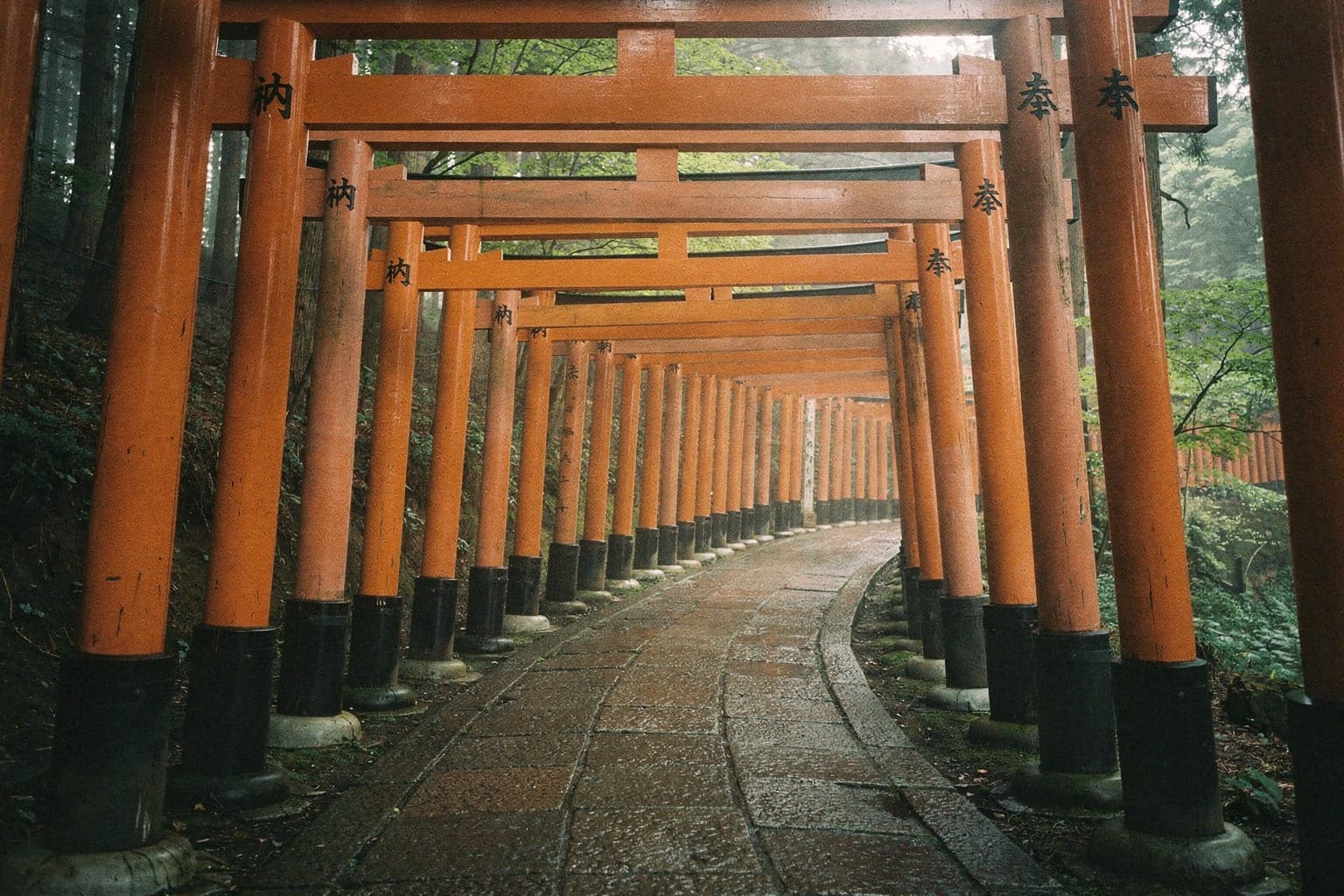
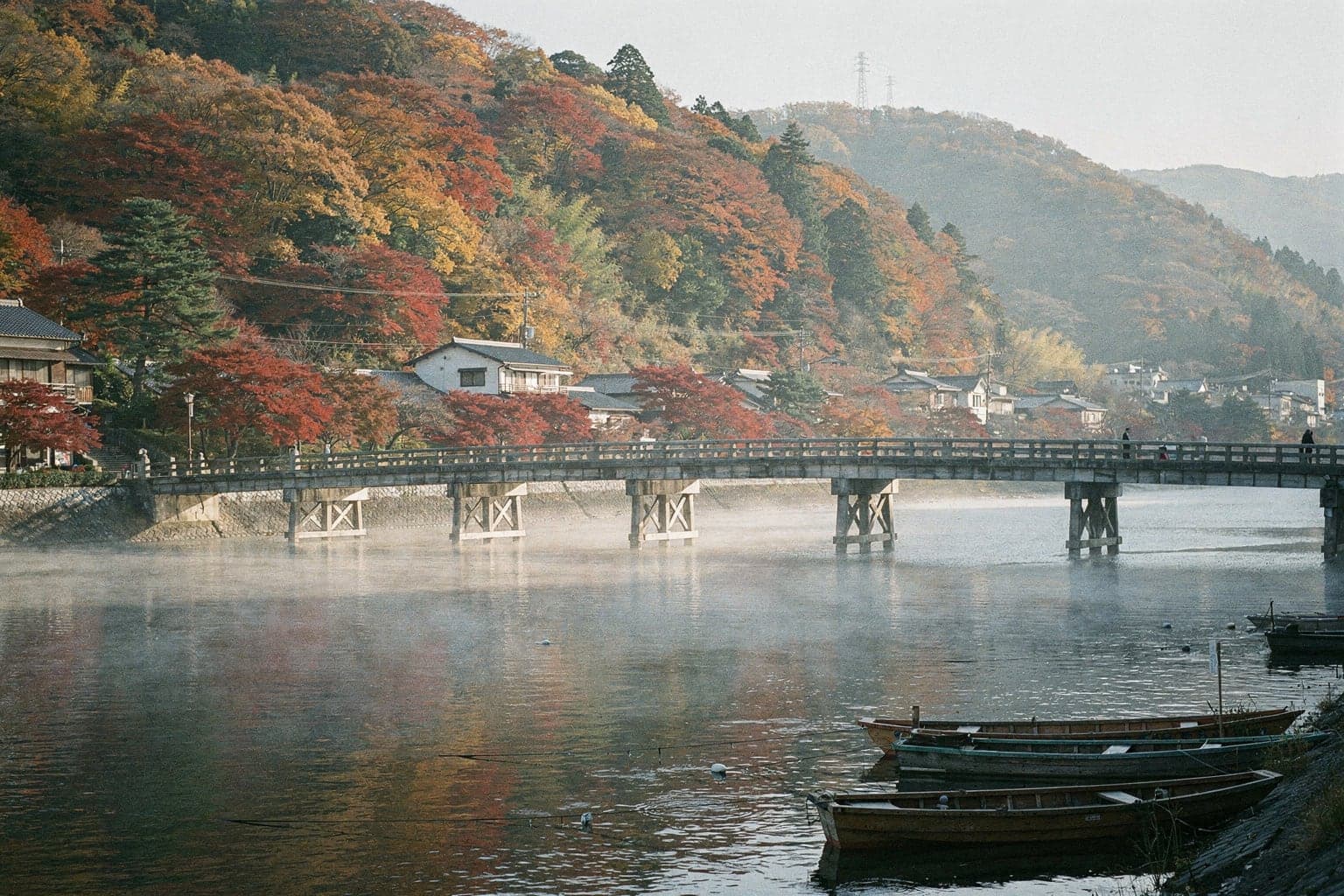
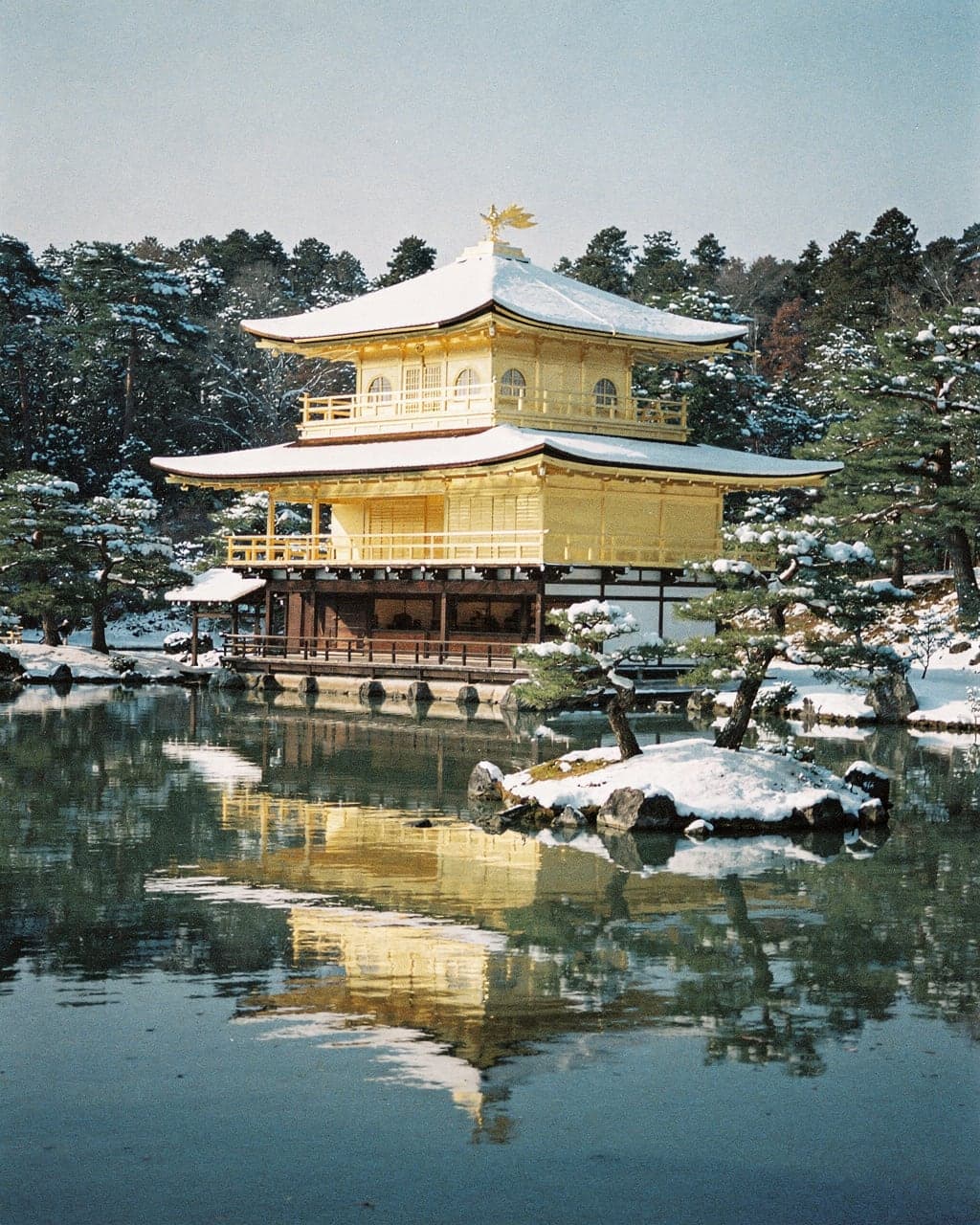
Illustration: Spike Travel (AI-assisted)
Questions people ask
Do I need a visa or JESTA to visit Kyoto in 2026?
Not if you hold a US, UK, EU, Canadian or Australian passport and are visiting for tourism for up to 90 days. JESTA, Japan's electronic travel authorisation, became law in May 2026 but is not operating yet; the start date will be set by cabinet order, no later than 31 March 2029. Visit Japan Web is free and optional.
How many days do I need in Kyoto?
Three full days covers the east (Fushimi Inari, Kiyomizu-dera, Gion, the Philosopher's Path), the north-west (Kinkaku-ji, Ryoan-ji) and Arashiyama. Add a fourth for Nara or Uji.
Can tourists still visit Gion?
Yes. Hanamikoji Street and Gion's public streets are open to everyone. Since April 2024, the Gion Minamigawa council has barred visitors from its private side alleys, and signs warn of a ¥10,000 charge for photography on private roads. Never photograph maiko or geiko without their consent.
When is the best time to visit Fushimi Inari?
Before 8am or after about 4pm. The shrine is free and never closes, and the crowds thin sharply above the Yotsutsuji intersection, roughly halfway up. The JR Nara Line reaches Inari Station in under ten minutes from Kyoto Station.
How much is Kyoto's accommodation tax?
Since 1 March 2026 it is charged per person per night on the room rate excluding meals and tax: ¥200 under ¥6,000, ¥400 up to ¥19,999, ¥1,000 up to ¥49,999, ¥4,000 up to ¥99,999, and ¥10,000 from ¥100,000.
Should I stay in Kyoto or Osaka?
Stay in Kyoto if sightseeing is the point. You need early starts to beat the crowds, which is much easier from a Kyoto bed. Osaka is about 30 minutes away by JR special rapid train and suits travellers who want nightlife and plan only one or two Kyoto days.
Is the Kyoto bus and subway pass worth it?
The ¥1,100 Subway and Bus 1-Day Pass pays off from the fifth ride at the ¥230 flat bus fare, and it covers the weekend EX100 and EX101 sightseeing express buses. On a day built around trains and walking, pay as you go with an IC card instead.
Sources
Where the facts on this page come from. Dates show when we last checked each one.
- Immigration Services Agency of Japan, 2026 amendments to the Immigration Control Act (JESTA)accessed Oct 12, 2026
- Immigration Services Agency of Japan, overview of the amended law, JESTA commencement deadline (PDF)accessed Oct 12, 2026
- Ministry of Foreign Affairs of Japan, Exemption of Visa (Short-Term Stay)accessed Oct 12, 2026
- US Department of State, Japan travel advisoryaccessed Oct 12, 2026
- GOV.UK, Japan travel advice, entry requirementsaccessed Oct 12, 2026
- Government of Canada, Travel advice and advisories for Japanaccessed Oct 12, 2026
- Smartraveller, Japan travel adviceaccessed Oct 12, 2026
- Digital Agency, Visit Japan Webaccessed Oct 12, 2026
- Japan Meteorological Agency, Kyoto climate normals 1991–2020accessed Oct 12, 2026
- UNESCO World Heritage Centre, Historic Monuments of Ancient Kyoto (Kyoto, Uji and Otsu Cities)accessed Oct 12, 2026
- Kyoto City, accommodation tax rates from 1 March 2026accessed Oct 12, 2026
- Kyoto City Tourism Association, Kyoto's accommodation tax to change starting Marchaccessed Oct 12, 2026
- Kyoto City Transportation Bureau, resident-priority city bus fares (plan for fiscal 2027)accessed Oct 12, 2026
- Kyoto City Transportation Bureau, EX100 and EX101 sightseeing express busesaccessed Oct 12, 2026
- Kyoto City Transportation Bureau, Subway and Bus 1-Day Passaccessed Oct 12, 2026
- Mainichi, Kyoto City Buses to introduce new payment systems, including credit cards, next fiscal yearaccessed Oct 12, 2026
- Kyoto City Tourism Association, Kyoto Travel congestion forecastaccessed Oct 12, 2026
- Kyoto City Tourism Association, access to Fushimi Inari Taishaaccessed Oct 12, 2026
- JR West, HARUKA One-way Ticket pricesaccessed Oct 12, 2026
- Kansai International Airport, taxis and fixed faresaccessed Oct 12, 2026
- Kansai Airport Transportation Enterprise (KATE), limousine bus faresaccessed Oct 12, 2026
- Osaka Airport Transport, Itami Airport to Kyoto Station limousine busaccessed Oct 12, 2026
- JR Central, oversized baggage on the Tokaido, Sanyo and Kyushu Shinkansenaccessed Oct 12, 2026
- JR Central press release listing the Tokyo to Kyoto Nozomi fare of ¥14,170accessed Oct 12, 2026
- Japan Rail Pass official site, pricesaccessed Oct 12, 2026
- Shokoku-ji, Kinkaku-ji access, hours and admissionaccessed Oct 12, 2026
- Kiyomizu-dera, 2026 news and admissionaccessed Oct 12, 2026
- Nijo-jo Castle, admission feesaccessed Oct 12, 2026
- Tenryu-ji, admission and accessaccessed Oct 12, 2026
- Ryoan-ji, hours and admissionaccessed Oct 12, 2026
- The Straits Times (The Japan News), Ginkaku-ji to raise admission to ¥1,000 from April 2026accessed Oct 12, 2026
- Inside Kyoto, Okochi Sanso Villa (admission with matcha)accessed Oct 12, 2026
- Japan Guide, Fushimi Inari Shrine hours and admissionaccessed Oct 12, 2026
- Byodo-in, visitor guide and admissionaccessed Oct 12, 2026
- Todai-ji, opening hours and admission feesaccessed Oct 12, 2026
- Japan Travel, Himeji Castle entry fees rise for non-residents from March 2026accessed Oct 12, 2026
- The Guardian, Kyoto bans tourists from private alleys in Gion (March 2024)accessed Oct 12, 2026
- National Tax Agency, move to the refund method for tax-free sales from 1 November 2026 (PDF)accessed Oct 12, 2026
- Japan Tourism Agency, Japan Tax-free Shop guidance for visitorsaccessed Oct 12, 2026
- National Tax Agency, International Tourist Tax (¥3,000 from 1 July 2026)accessed Oct 12, 2026
- Kyoto City, partnership oath system (since September 2020)accessed Oct 12, 2026
- Kyoto City, 2025 census preliminary populationaccessed Oct 12, 2026
- Ministry of Health, Labour and Welfare, bringing medicines into Japanaccessed Oct 12, 2026
- Japan National Tourism Organization, Japan Visitor Hotlineaccessed Oct 12, 2026
- JNTO, Safety tips app for travellersaccessed Oct 12, 2026
- Numbeo, cost of living in Kyoto (crowd-sourced, used as a sanity check)accessed Oct 12, 2026
- Airalo, Japan eSIM pricesaccessed Oct 12, 2026
If you like Kyoto
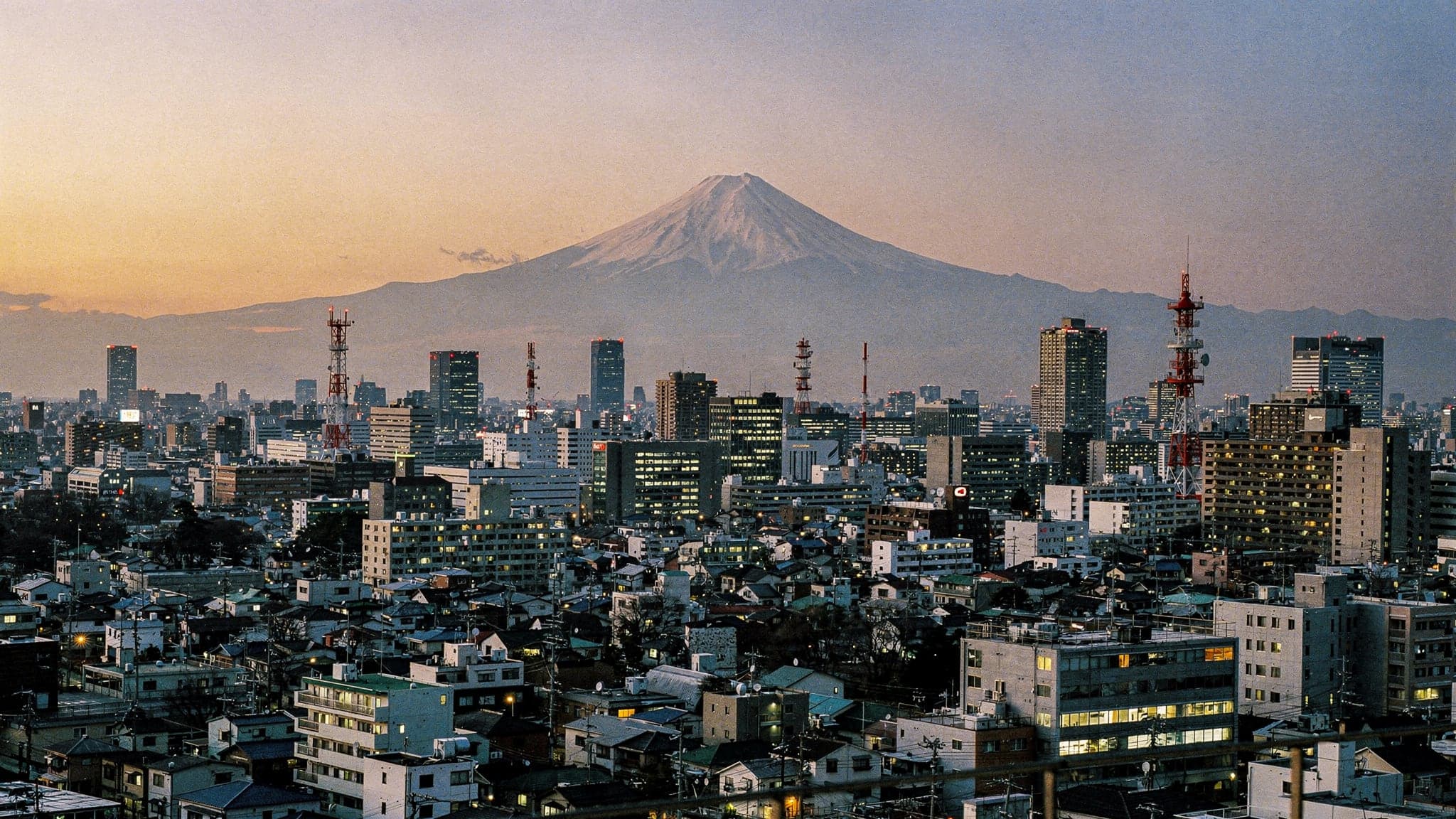
Japan
Tokyo
Fourteen million people, trains that leave on time, and dinner at a counter older than your grandparents.
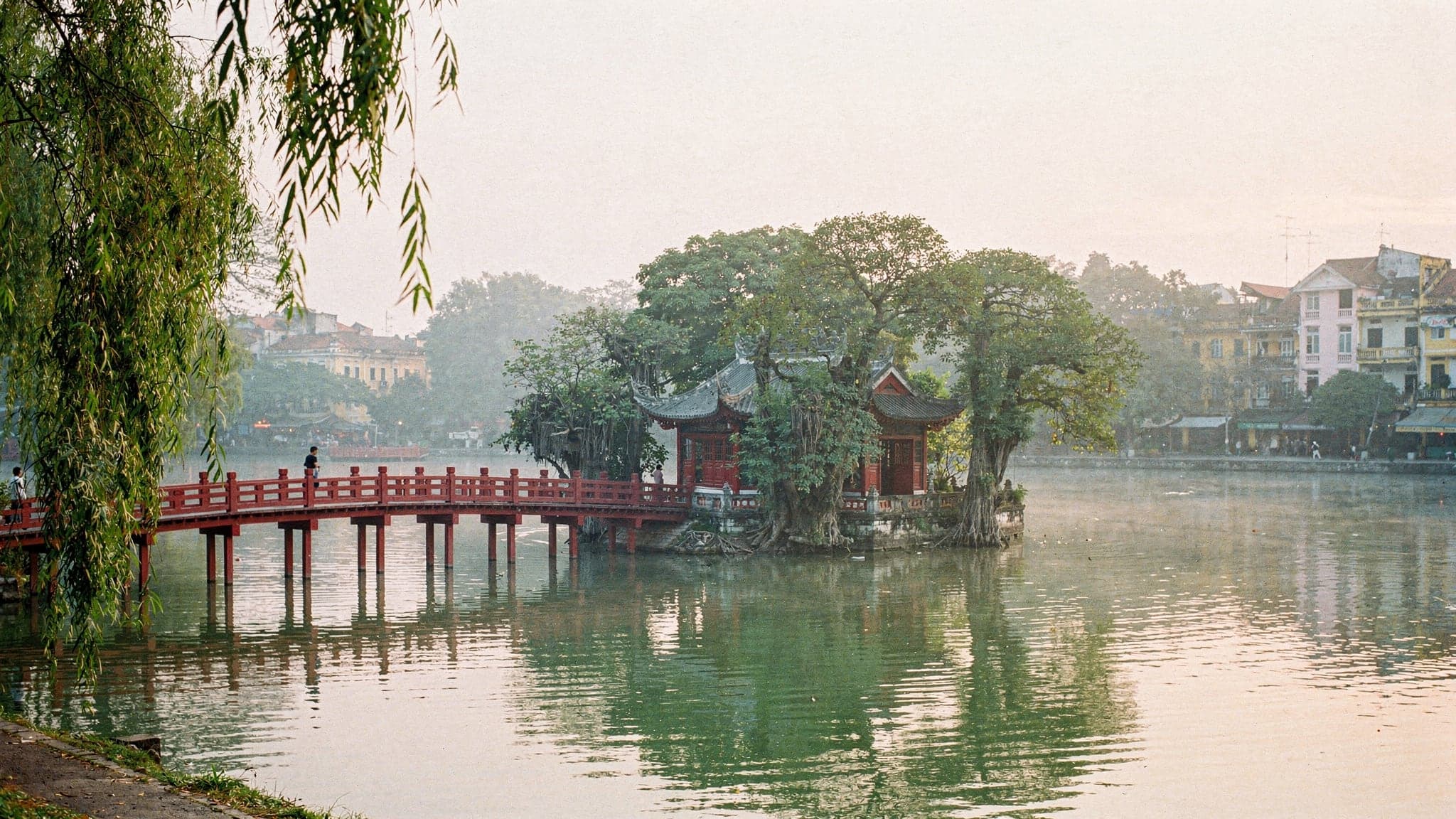
Vietnam
Hanoi
A thousand-year-old capital that still eats breakfast on the pavement.
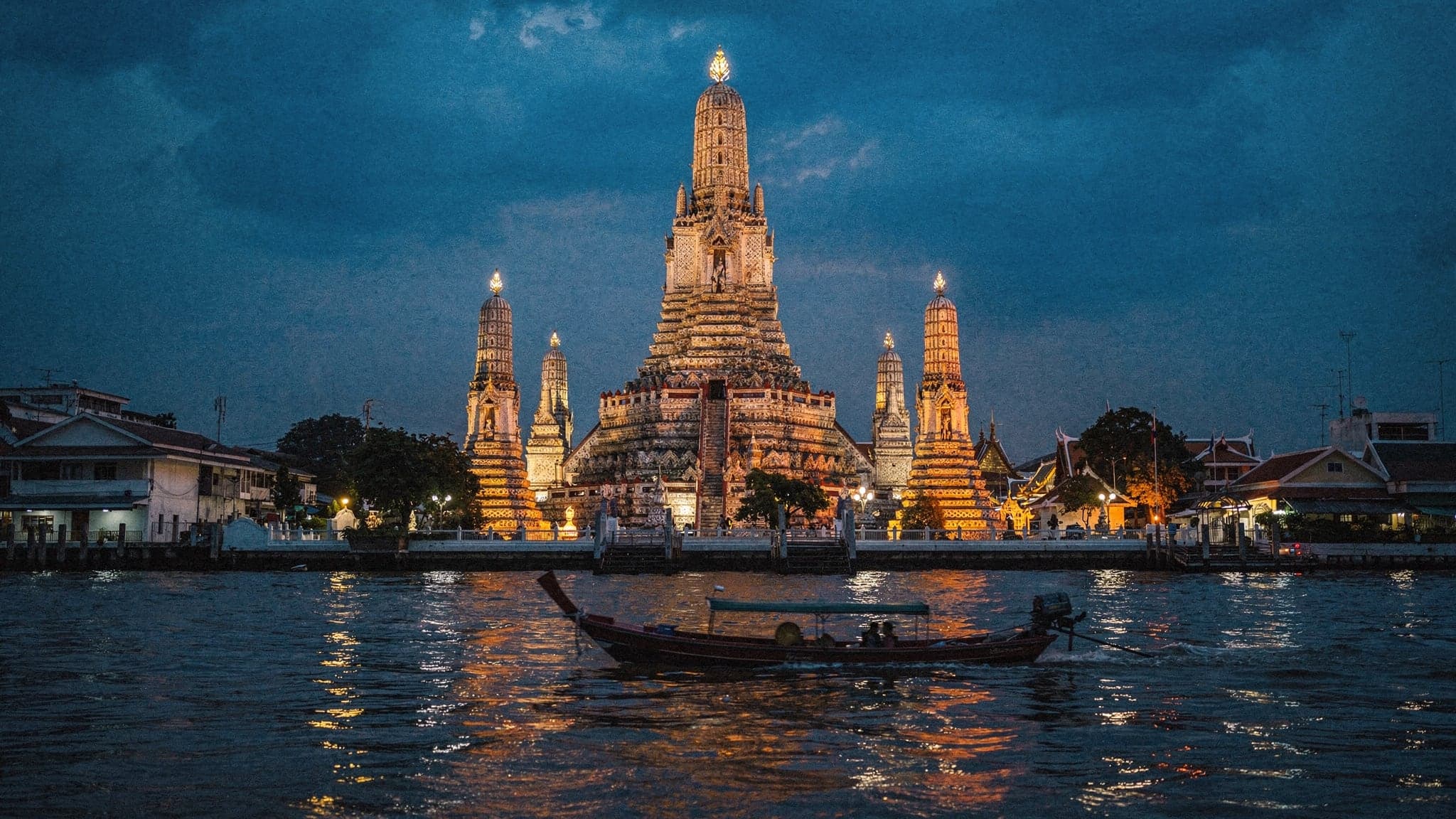
Thailand
Bangkok
Temples at dawn, noodles at midnight, and a river that still carries the city between them.
Book Kyoto
These links go to the booking sites we would use ourselves. Nothing here is currently sponsored.
Fast facts
- Currency
- Japanese yen (JPY)
- Languages
- Japanese
- Plugs
- Type A, B, 100 V, 60 Hz (Tokyo and eastern Japan run at 50 Hz)
- Time zone
- Tokyo (GMT+9)
- Tap water
- Safe to drink
- Tipping
- Not done anywhere. Service is included, and money left on the table may be handed back to you.
- Driving
- On the left
- Emergency
- 110 police; 119 fire and ambulance; Japan Visitor Hotline 050-3816-2787 (24 hours, English)
- Dialing code
- +81
- Safety
- 5/5
When to go
Best: Apr, Nov.
Good for
- Culture & history5/5
- Food & drink5/5
- Nature & scenery4/5
- Adventure2/5
- Beaches1/5
- Nightlife2/5
- Romance5/5
- Family-friendly4/5
- Value for money3/5
- Big-city energy2/5
- Slow & restorative4/5
- Wildlife2/5